

If I were a socialist, I’d be desperate to deny that the Nazis were socialists. Why? Well, it’s bad enough that:
The Union of Soviet Socialist Republics turned out to be a nightmarish totalitarian despotism, a dystopia of mass slavery and mass murder.
The USSR, by conquest and imitation, spawned dozens of additional nightmarish totalitarian despotisms.
These despotisms included the jaw-dropping hellscape of Maoist China, the world’s most populous country at the time.
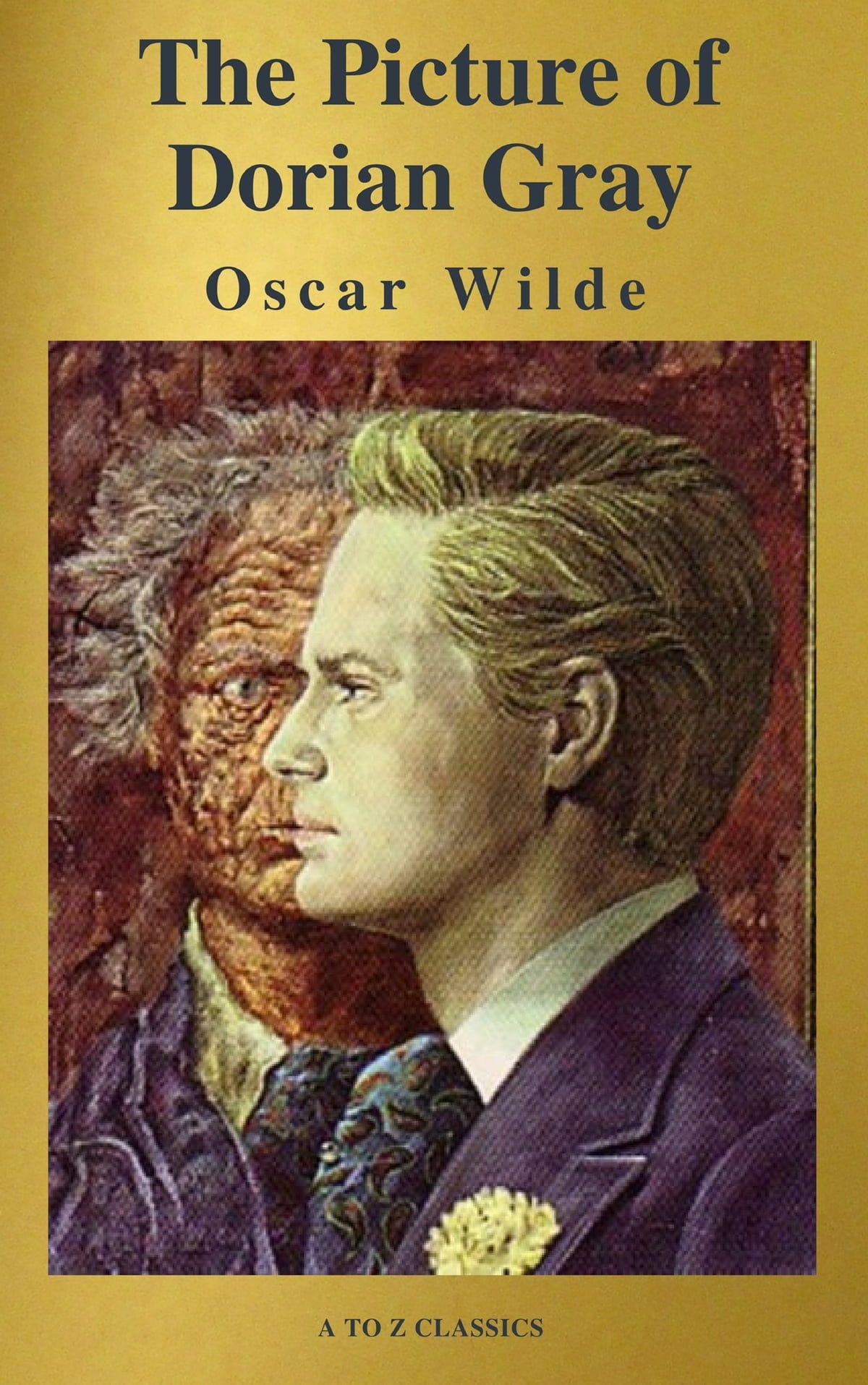
Yet as long as Nazi Germany was not socialist or even anti-socialist, the socialist can find solace in the fact that the Soviet Union was the primary agent in the defeat of an even more nightmarish totalitarian despotism. While there’s some dispute over whether the Soviet Union or Nazi Germany had the higher body count, Nazi Germany definitely had a higher annual murder rate for territory under its control. As long as you charitably interpret the Molotov-Ribbentrop Pact as “Stalin was just buying time to prepare for the inevitable war,” you can tell yourself that socialism saved civilization despite its Dorian Gray-level transmogrification.
On the other hand, suppose that not just Nazism, but fascism generally, was a Marxist heresy. Suppose you accept, as A. James Gregor argues in Young Mussolini and the Intellectual Origins of Fascism, that Mussolini was the Lenin of Italy until he was excommunicated from the Italian Socialist Party in 1914. Suppose, as Paul Johnson claims in Modern Times, that socialists proverbially “can’t handle the truth” about fascism:
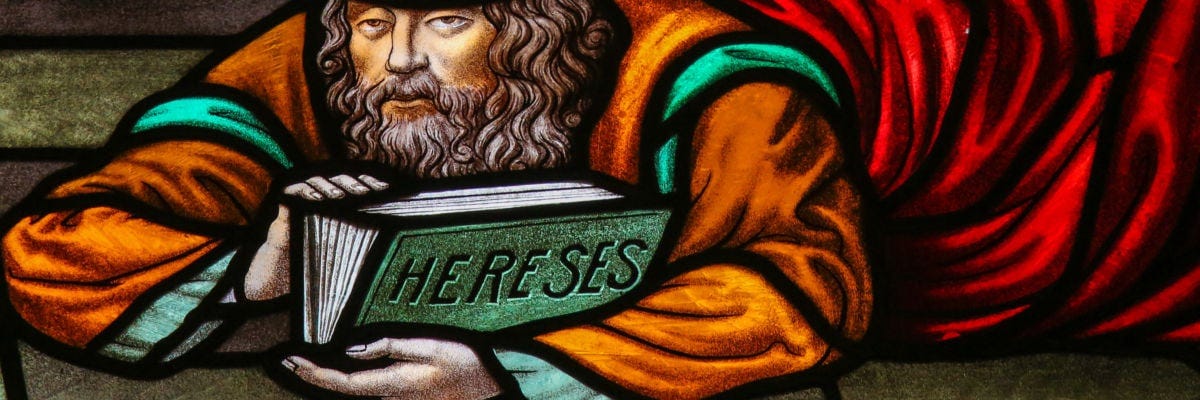
By the mid-1920s there were fascist movements all over Europe. One thing they all had in common was anti-Communism of the most active kind. They fought revolution with revolutionary means and met the Communists on the streets with their own weapons. As early as 1923 the Bulgarian peasant regime of Aleksandr Stamboliski, which practised “agrarian Communism,” was ousted by a fascist putsch. The Comintern, the new international bureau created by the Soviet government to spread and co-ordinate Communist activities, called on the “workers of the world” to protest against the “victorious Bulgarian fascist clique,” thus for the first time recognizing fascism as an international phenomenon. But what exactly was it? There was nothing specific about it in Marx. It had developed too late for Lenin to verbalize it into his march of History. It was unthinkable to recognize it for what it actually was—a Marxist heresy, indeed a modification of the Leninist heresy itself.
From this perspective, socialism looks truly beyond redemption. Even if the Soviet Union “saved civilization,” this is only a case of one terrible socialist regime saving civilization from an even worse socialist regime. None of which would have been necessary if socialism had never existed in the first place! Verily, you could just tweak the title of David Benatar’s anti-natalist Better Never to Have Been: The Harm of Coming into Existence and turn it into Better Never to Have Been: The Harm of Socialism Coming into Existence.
Once you accept that Nazi Germany was socialist, how could you even escape this Benatarian evaluation of socialism? “Socialism also inspired the modern welfare state, which is better than laissez-faire capitalism” is probably your best way out. But for this defense to work, you’d have to commit to, “The welfare state is so awesome that it was worth World War II, the Holocaust, the Russian Civil War, Lenin’s famine, Stalinism, dekulakization, Stalin’s famines, the Chinese Civil War, Mao’s mass-murderous Land Reform Movement, the Great Leap Forward, the Cultural Revolution, the Vietnam War, the Khmer Rouge, and much, much more.” Which is crazy even if you think that the welfare state rescues the poorest 10% of the First World from Third World poverty.
Yes, socialists could fairly protest that the “better never to have been” verdict is so gratifying for anti-socialists that they would gladly twist the facts to reach it. Fair enough, but that cuts both ways. This verdict is also so soul-crushing for socialists that they would gladly twist the facts to deny it. The specter of motivated reasoning looms over us all. But if you have no dog in this fight, and calmly read what I’ve been writing about this, I think you’ll end up concluding that Nazi Germany was, livid socialist protests notwithstanding, deeply socialist in both theory and practice. Which in turn leads straight to the philosophy of history I now place before you.
You're beating a dead horse, Bryan.
Today's (and tomorrow's) socialists are NOT those of the 20th century who were indeed responsible for its obscene butcher's bill and the penury and despair of countless millions forced to live through it. Instead, this is a NEW socialism; Democratic Socialism, by name and definition.
It is a socialism that expertly harnesses the free market to produce goods abundantly, efficiently, and perfectly in tune with consumer demand. At the same time and by general and democratic agreement, the "excesses" of capitalism are curbed, and the vast productive capacity of the system is carefully and competently managed to provide decent and satisfying lives for ALL the members of a democratic socialist society. THIS time, things will be different—you'll see...
The antagonism between socialism and fascism is just sibling rivalry. Stalin murdered Trotsky; does that make Trotsky an anticommunist? Hardly.
Saying that socialism and fascism are opposites is like saying that catholicism and protestantism are opposites.