

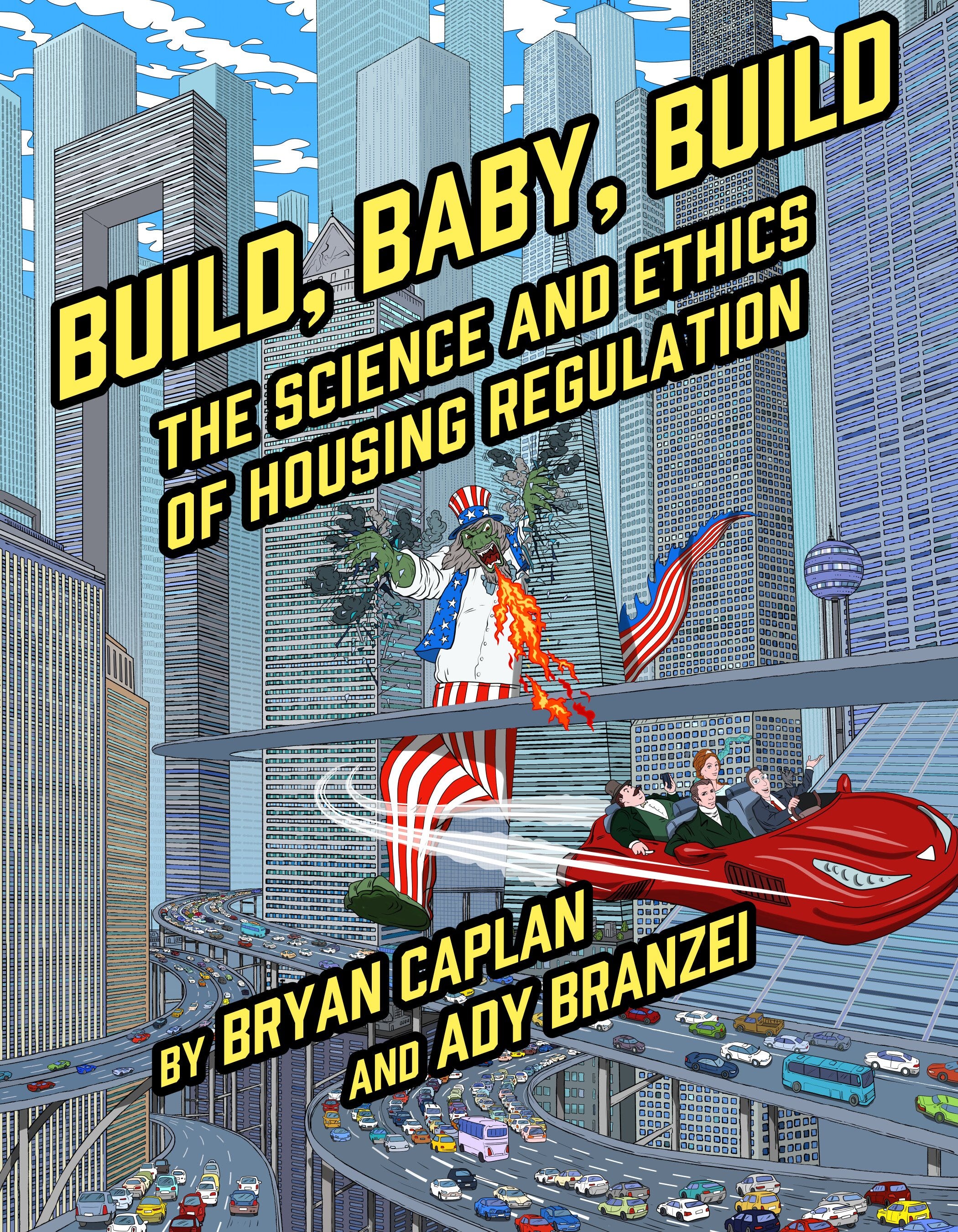
My Build, Baby, Build: The Science and Ethics of Housing Regulation was a successful book, but I firmly believe that it would have gotten far more attention — and much higher sales — if I’d managed to release in 2023 instead of 2024. My standard book marketing strategy relies heavily on free media coverage, which is frustratingly hard to get in presidential election years. Sure, I hit one media home run that July — a companion data-heavy essay in the New York Times. But my NYT piece dropped in the midst of the Democrats’ scramble to find a last-minute replacement nominee, so the ripple effects were slight.
In contrast, the release of Ezra Klein and Derek Thompson’s new Abundance has been perfectly timed. Strategic Democrats are earnestly searching for a big, new, crowd-pleasing idea — and evidence-based Democrats have noticed that housing, energy, and transportation are reliably scarce and expensive in one-party Democratic states. California’s Governor Newson even gave Ezra a shout-out in his press conference on CEQA reform.
Since abundance is having a moment, now seems like a great time to repitch my case for by-right construction. Because if Klein and Thompson believe in abundance, I superbelieve in superabundance.
My central thesis: Governments regulate housing as if the product has massive net negative externalities. They’re hyperconscious of all the downsides for current residents. Practical downsides, like traffic congestion, parking congestion, and school congestion. Aesthetic downsides, like noise, obstruction of views, and destruction of history. But governments almost totally neglect all of the upsides of housing for current residents — and these upsides are legion. More residences in your area means more job opportunities, more shopping opportunities, more social opportunities, and more cultural opportunities. Who wants to live in the middle of nowhere?
The prudent response is to base housing policy on the sum of these effects. And there is very strong evidence that the sum of the effects is actually positive. What is this evidence? Simple: The typical human eagerly pays a large upcharge to live close to other humans. In other words, the typical human looks at the package deal of (all the downsides of living near lots of other people AND all the upsides of living near lots of other people) and concludes, “I’m willing to pay a lot of money for that package.”
What’s so bad about existing housing policies? Again, simple: Governments regulate housing as if the product has massive net negative externalities, even though it actually has massive net positive externalities!
If anything, then, government should be encouraging more housing than the free market delivers, not less. Given governments’ abysmal track record, though, our best bet is strict separation of housing and state. Property owners, not government, should have the final say over what to build. If neighbors object, they should have to wait until they start experiencing large physical harms to sue for legal redress. Yes, this stacks the deck against complaining, but that’s a feature, not a bug.
Along the way, Build, Baby, Build make abundant side points. Including:
Housing deregulation is a great poverty reduction policy.
Housing deregulation delivers all of the benefits for non-college males that national conservatives erroneously attribute to protectionism and industrial policy.
Housing deregulation lets us build the history of the future.
Housing deregulation boosts fertility by getting young people out of their parents’ basements in a timely manner.
Housing deregulation will on balance beautify our world, building the history of the future.
False modesty aside, Build, Baby, Build also provides a more sophisticated political economy than Abundance. Blaming “our dysfunctional and polarized parties” sounds good, but the root cause of democratic dysfunction is public opinion. If the median voter were economically literate, numerate, free of status quo bias, and non-paranoid, there would be no need for books about abundance. Abundance would be here already.
P.S. If Ezra and Derek’s speaking fees are out of your price range, but you want to hear more about abundance, definitely email me. Have slides, will travel.
>False modesty aside, Build, Baby, Build also provides a more sophisticated political economy than Abundance. Blaming “our dysfunctional and polarized parties” sounds good, but the root cause of democratic dysfunction is public opinion. If the median voter were economically literate, numerate, free of status quo bias, and non-paranoid, there would be no need for books about abundance. Abundance would be here already.
True as it might be, I don't think calling voters economically illiterate is a good strategy to getting elected. Flattering their egos and blaming special interests tends to be more succesful.
It's so amusing to watch Klein and Thompson declare "eureka" after finally realizing some of the things that libertarians/economists have been saying for years. Unfortunately, they still haven't read the literature on public choice theory and therefore falsely believe that the solution isn't less government but just "better" government. I guess we we will have to wait another couple of decades for this second blinding glimpse of the obvious.