

When the truth is ugly, people lie. That’s human nature. Psychologists call this Social Desirability Bias, and it’s the intellectual foundation of my forthcoming Unbeatable: The Brutally Honest Case for Free Markets.
But there’s one classic ugly inquiry which, as best as I recall, I’ve never known to be answered with a bald-faced lie. It’s a high-stakes question that children often ask their parents. The question: “Will you die one day?”
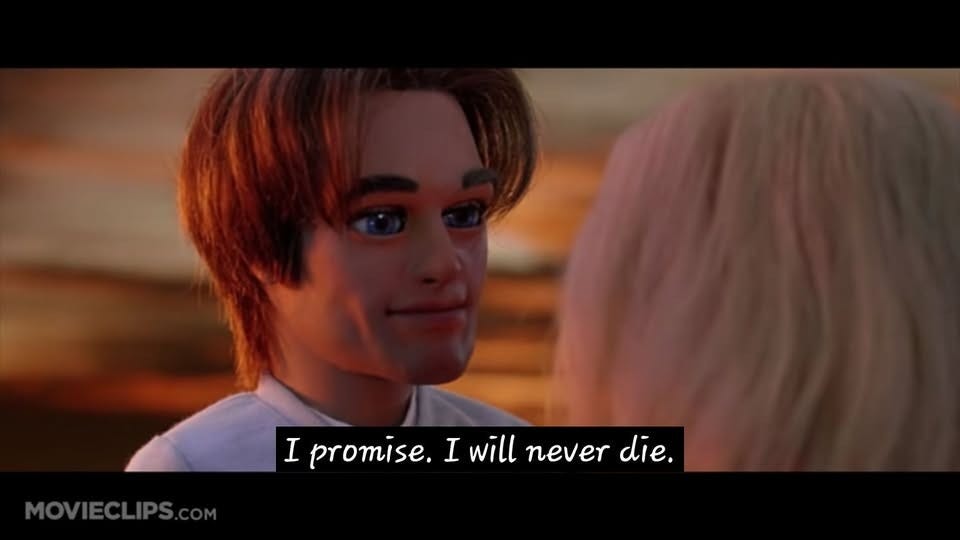
Faced with this query of existential dread, plenty of parents respond evasively — or just ignore the question. “Why do you ask?” is the go-to dodge. “Not for a long time” is the sugar-coated (probable) truth. Yet almost no parent hears the question and responds, “No, my child. I will never die.”
How would you react if you overheard this pretty lie? It’s hard not to sympathize with the liar. He’s not seeking material advantage. He’s not trying to hurt anyone. He just wants to avoid making a little kid sad about an unavoidable tragedy.
So why isn’t baldly lying to children about death far more common? You could declare, “The kid will find out sooner or later. You’re just delaying the inevitable.” But unless postponing a bad thing makes it worse, it is good to postpone bad things. Just as “You’ll still die eventually” is a terrible argument against healthy living, so “The kid will find out sooner or later” is a terrible argument against sheltering kids from harsh realities.
It’s tempting to reply, “The later the kid learns the truth, the more horrified he’ll be when he finally does learn it.” But is there any actual evidence for this? I cried when my mom told me about the non-existence of Santa Claus. But if she had waited until I was ten years old instead of eight years old, I probably would have cried less, not more.
Another story is that most parents do tell pretty lies about death. Parents who admit that they will die one day also frequently tell their children that one day, the whole family will be united in heaven’s eternal bliss. The main problem with this response, however, is that lying about death and lying about the afterlife are substitutes. “After I die, I’ll spend eternity in heaven” and “I won’t die” are similarly comforting stories. But a large share of parents, when asked, refuse to tell either of them.
An appeal to parental reputation is a stronger response. Parents who lie to their children undermine their own credibility, which ultimately makes life hard for parents, children, and the entire family. But as far as I can tell, I’m one of the few parents who takes this insight to heart. Most parents lie to their children fairly frequently. So why not tell one additional lie about mortality?
I’m also deeply sympathetic to the view that, consequences aside, honesty is intrinsically good. But again, since most parents tell their children all kinds of lies, it’s hard to understand why they draw the line at lying about “Will you die one day?”
What difference does it make? To start, I’d like to better understand the limits of Social Desirability Bias. Given human beings’ strong propensity to tell pretty lies, why do they so rarely tell pretty lies about their future demise?
Curiosity aside, though, I think that Social Desirability Bias is a powerful force that sustains policies that destroy trillions of dollars of wealth. If we could figure out what leads parents to speak ugly truths about death, perhaps we could figure out how to lead humans to stop believing and parroting pretty lies about immigration laws, housing regulation, universal redistribution, education subsidies, medical subsidies, and nuclear power.
I leave you then with two questions for the comments.
First, am I correct that when asked, “Will you ever die?,” people rarely lie?
Second, assuming that’s true, what exactly is stopping people from lying? Please don’t repeat any of the debunked responses above unless you’re also ready to argue that my debunking is deficient.
I think an obvious reason that is worth considering is that lying about death could possibly cause a child to have an unhealthy lack of risk aversion. While few parents are eager to tell their kids about death they are unwilling to have their kid's believe in the false idea that death can be cheated. Too much fear is unhealthy but a complete absence of it is deadly. All of the other things people are willing to lie about while contrary to reality are not as acutely dangerous. Believing in communism as an effective way to allocate resources while deadly on a meta level is not as immediately deadly as say having an Evil Kneivel or a Steve Irwin approach to the physical world.
I’ve certainly never heard of someone outright lying about this.
I’d contend that it’s fairly simple, the parent cannot lie to themselves. “Will you die one day?” asks about a discrete, inarguable, and universal fact.
I all but practice radical honesty with my children but recognize that I could tell them “we’re out of ice cream” rather than argue about dessert. They’d never catch me. If they did, I could feign ignorance. The stakes are sufficiently low that I can lie to myself and alter my memory such that I *believe* I was mistaken and not truly lying.
When discussing immigration, I pull from a list of facts and impressions, many half-remembered. I perforce rely on the testimony of experts (like Bryan Caplan). If I find that I’m arguing a falsehood, I can always blame Bryan Caplan for giving me bad information. I can say I misread or misheard him. I have a multitude of ways of convincing myself and others that I was not wrong nor lying.
The stakes on this question are so high that you assume your child will remember your answer. You expect them to remember. If you lie about a foundational fact of life, the responsibility is entirely on you. You can’t be mistaken. You can’t say you misheard the question. You can’t blame that damned economist Bryan Caplan!
If your child asks you “Daddy, why did you tell me you would never die?” the only answer is “I chose to lie.” That feels bad and so we don’t do it.