

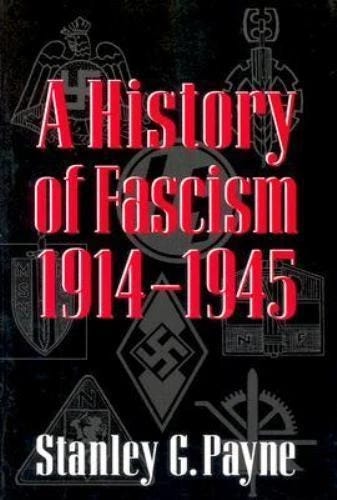
In my recent “The Ugly Path to Peace,” I pointed to the execution of Corneliu Codreanu, the would-be Hitler of Romania, along with much of his top brass. All this happened in 1938 on the strangely symbolic day of November 30, Romania’s “Night of the Vampires.” My favorite discussion of this gripping tale is in Stanley Payne’s excellent A History of Fascism, 1914-1945. The great Payne speaks:
Discarding the idea of further elections, on February 10, 1938, the Romanian king carried out a royal coup against the political system, naming a new ministry under Patriarch Miron Cristea, head of the Romanian Orthodox Church, invested with decree powers. Within a few days it promulgated a new constitution, which in some ways superficially resembled the liberal constitution of 1923 but in fact concentrated power in the hands of the king, creating a situation analogous to the King Alexander regime of Yugoslavia earlier in the decade. The constitution was, however, in other ways comparatively moderate and did set some limits on the government’s authority. It was also accompanied by rigorous new laws on public order that increased the powers of the courts and the police…The king wavered between plans to have Codreanu murdered and renewed attempts to co-opt him politically, but the latter proved totally impossible. The Legionnaire Conducator (Leader) accepted the dictatorship and gave orders to his followers to lie low for the time being until the new arrangement weakened, but Armand Calinescu, the tough new interior minister, was determined to break his power. Codreanu was arrested once more on April 16, and several thousand of his followers were also incarcerated in the days that followed. A military court subsequently sentenced him to ten years of forced labor for subversion.
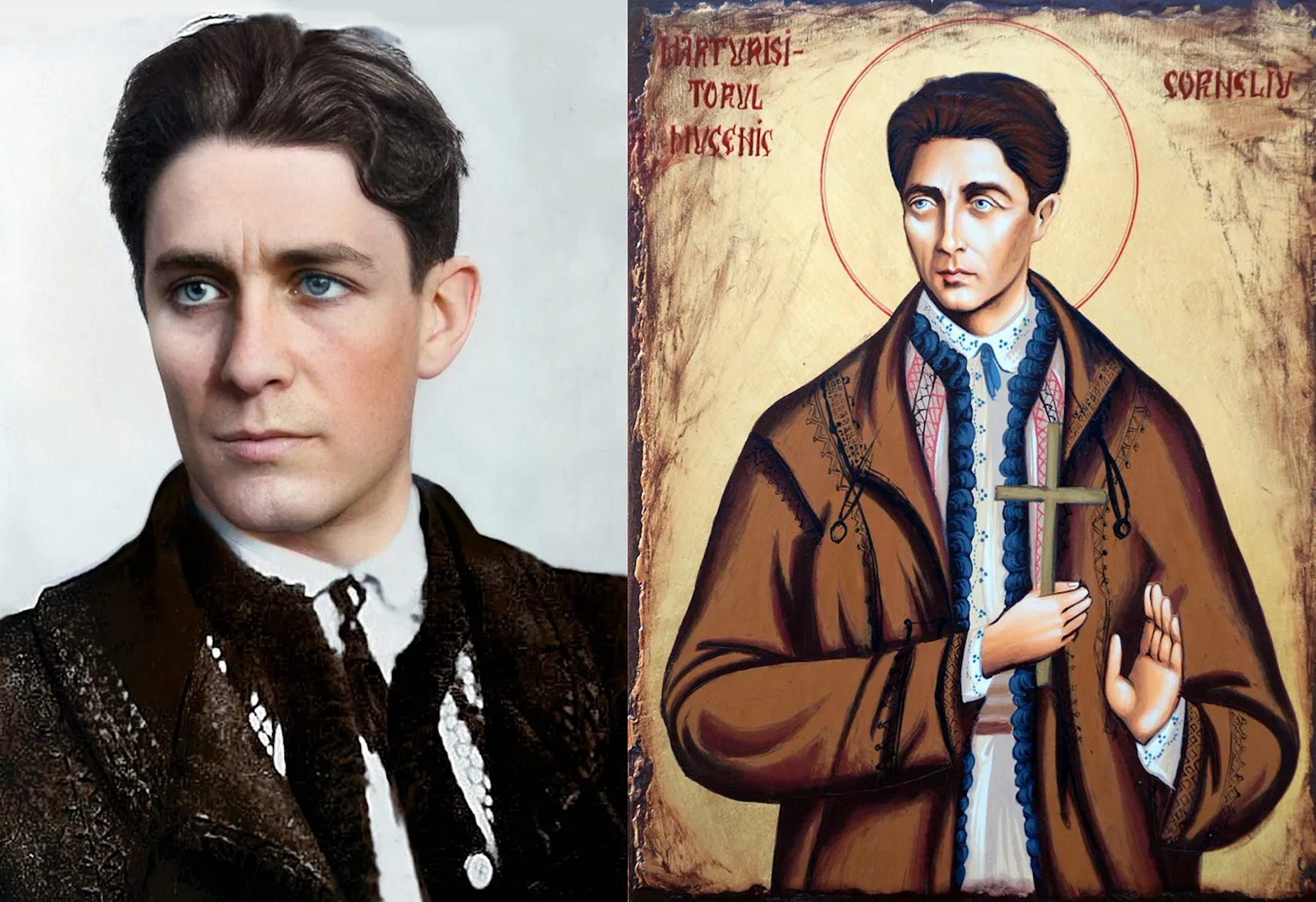
Acting leadership of the Legion passed to the young lawyer Horia Sima, known more for fanaticism than political judgment. Codreanu realized that the Romanian dictatorship would not hesitate to execute him and ordered Sima to have the Legion desist from violence or other overt actions unless it appeared that his life was in imminent danger. By midautumn Sima seems to have been convinced that the way to deal with this was through a new round of bombings and terrorism that would bring the government to its knees. Codreanu was able to send a dispatch from prison ordering the Legionnaires to desist, but it was too late. On November 30, the “night of the vampires” in Romanian folklore, a detachment of the brutal state Siguranta removed Codreanu and thirteen other top Legionnaires from prison, carrying them off in trucks. They were then strangled with wires, shot, and dumped in a lime pit at a military prison outside Bucharest.
Sima prepared the Legion for a full-scale insurrection against the Carolist dictatorship, hoping to capitalize on sympathies within the military, but found that these were insufficient. The army remained under discipline, and the Legion, like all other fascist movements, was not strong enough to launch an insurrectionary civil war. The plan for revolt on the sixth of January 1939 had to be canceled, and Sima and hundreds of other leaders and activists fled abroad, mainly to Germany. Once more a rightist authoritarian regime had suppressed a popular fascist movement, as earlier in Austria and concurrently in Hungary. The Legion, which despised democracy, the bourgeoisie, and capitalism, required at least a degree of bourgeois democracy to have the opportunity to build greater support and/or to achieve power.
It strikes me that one argument in favor of constitutional monarchy is that the social isolation and from-birth indoctrination might be the psychologically optimal way to ensure that a sort of “swordholder for democracy” — IE, the monarch whom we expect to bail out democracy from authoritarian attempts — can make the correct but hard decision about when to execute a particular threat.
I’d note that this is mostly theoretical, since although you’ve provided some examples here, it’s not remotely a reliable mechanism judging from the rest of the historical data set.
But the main example on the “pro” side is that of the institutional GOP capitulating to MAGA. The core dynamic that drove this was social: people in a political party who could theoretically brush off an authoritarian insurgency find that their entire social lives and livelihoods are based on loyalty to the party, and they balk at destroying their lives just to save democracy, and then make up a whole bunch of excuses about how they’re going to undermine the movement from within while functionally doing nothing but enable that movement. Vanishingly few GOPers were willing to buck MAGA; we call those who did “The Bulwark” and their staff numbers in the dozens.
Anyways, perhaps the solution to this is to take a random family, isolate them from the rest of society, make sure they never have to question their livelihood, and comprise their entire social life — from the lowliest servants to the highest ministers — of people reminding them every single day that their sole purpose in life is to command a special guard of royal forces to round up and murder any burgeoning fascist leadership before they’re able to commit a coup.
I’d be willing to pay some minuscule fraction of my taxes as this kind of insurance policy if it meant I wouldn’t have had to deal with the last decade of insanity and watching my country destroy its world-historic record for “Most Enlightened Evil Hegemony To Ever Exist”.
Can a system remain moral while defending itself against those who would destroy it?
What struck me here is that Bryan seems to move, at least briefly from libertarian moral clarity into something closer to tragic political realism, entertaining the possibility that extrajudicial action might be rational in survival terms. That tension feels unavoidable rather than resolvable