

Put yourself in the shoes of a top-ranking Iranian politician. A large share of your former superiors have been killed in the past few weeks. Why on Earth would you refuse to save your own skin by simply giving the U.S. and Israel what they want?
Conceivably, you’re a sincere religious fanatic, courting martyrdom so you can meet your 72 virgins. But opportunities for martyrdom are ubiquitous, and only a microscopic share of alleged true believers take advantage of these opportunities. Since actions speak louder than words, we can safely conclude that few top-ranking Iranian politicians genuinely want to die for their beliefs.
The better story is that top-ranking Iranian politicians are playing what economists call a “nested game.” While many, perhaps most, of these figures want to make peace to avoid death, they’re afraid that if they voice this opinion, their own hard-liners will kill them for cowardice. Outsiders see a united fanatical front, but only because dissenting insiders hide their true feelings.
You can see this dynamic clearly at the end of World War II in both Germany and Japan. Plenty of long-time “fanatics” tried to survive the war by hook or by crook. But as war raged, they kept their mouths shut year after year because their domestic “friends” were a much more immediate threat than their foreign enemies.
The logic of nested games even holds for national leaders. When Emperor Hirohito decided to surrender to the Allies, he provoked an attempted military coup. When asked, “Why didn’t Czar Nicholas back down in 1914?” historians’ standard answer is, “Because if he had, Pan-Slavist hawks would have overthrown him.” Even if Nicholas knew that he would lose his throne in 1917, his choices in 1914 were not “Rule in peace for life” or “Fight Germany and lose your throne in 1917.” His choices were “Try to keep the peace and lose your throne right now” or “Fight Germany and lose your throne in 1917.”
Most analysts who take the dilemmas of nested games seriously become fatalistic. Even if a large faction of the leadership of theocratic Iran, Imperial Japan, Nazi Germany, or Czarist Russia wants to make peace, they probably won’t. Indeed, even if the Supreme Leader wants to make peace, they probably won’t.
My reaction, in contrast, is agentic. If by some miracle, I were the Supreme Leader of any of these countries, I have devised a strategy to make peace with high probability of success — and low risk to myself. It’s not pretty, and once you grasp my strategy, you may think ill of me for publicizing this forbidden knowledge.
Nevertheless, this is a sketch of my master plan for making peace despite internal opposition:
Step 1. Hand-pick a small group of henchmen personally loyal to you. This is nothing out of the ordinary; almost every leader does this, especially in non-democracies.
Step 2. Privately prepare a list of all of the top enemies of peace under your nominal command. Profile the hard-liners, the hawks, the ultra-nationalists, the would-be martyrs, the true believers in revolution.
Step 3. Around midnight, summon your henchmen. Order them to wake up everyone on your list, keep them incommunicado, and bring them to a secret location within the next few hours. Give each top henchman sealed orders, with strict instructions not to open until an hour before dawn.
Step 4. If the leaders ask about the purpose of this meeting, instruct your henchmen to say that it’s “top secret” and “of utmost importance for the fate of the fatherland/motherland.” That’s it.
Step 5. As you may have guessed, the sealed orders say, “The people you have gathered are all guilty of high treason. Kill them NOW without delay. This is an ORDER from your Supreme Leader.”
Obviously this path to peace has a few rough edges. If you’re only number two in the system, it won’t reliably work unless you kill the Supreme Leader first. If you’re number eight, you probably have to simultaneously kill numbers one through seven. (Which, by the way, is approximately what von Stauffenberg tried to do in 1944, though his plans for top Nazis once captured were foolishly ambiguous).
To my knowledge, the closest historical analogue to my strategy happened in Romania on November 30, 1938. The Iron Guard was Romania’s murderous answer to the Nazi Party, and the monarchist government had most of its top leaders in prison, including party leader Corneliu Codreanu. Keeping them in prison was dangerous, and so was letting them go. Faced with this dilemma, the Romanian government saw a third option: It ordered the summary execution of their Iron Guard prisoners — and the order was strictly followed.
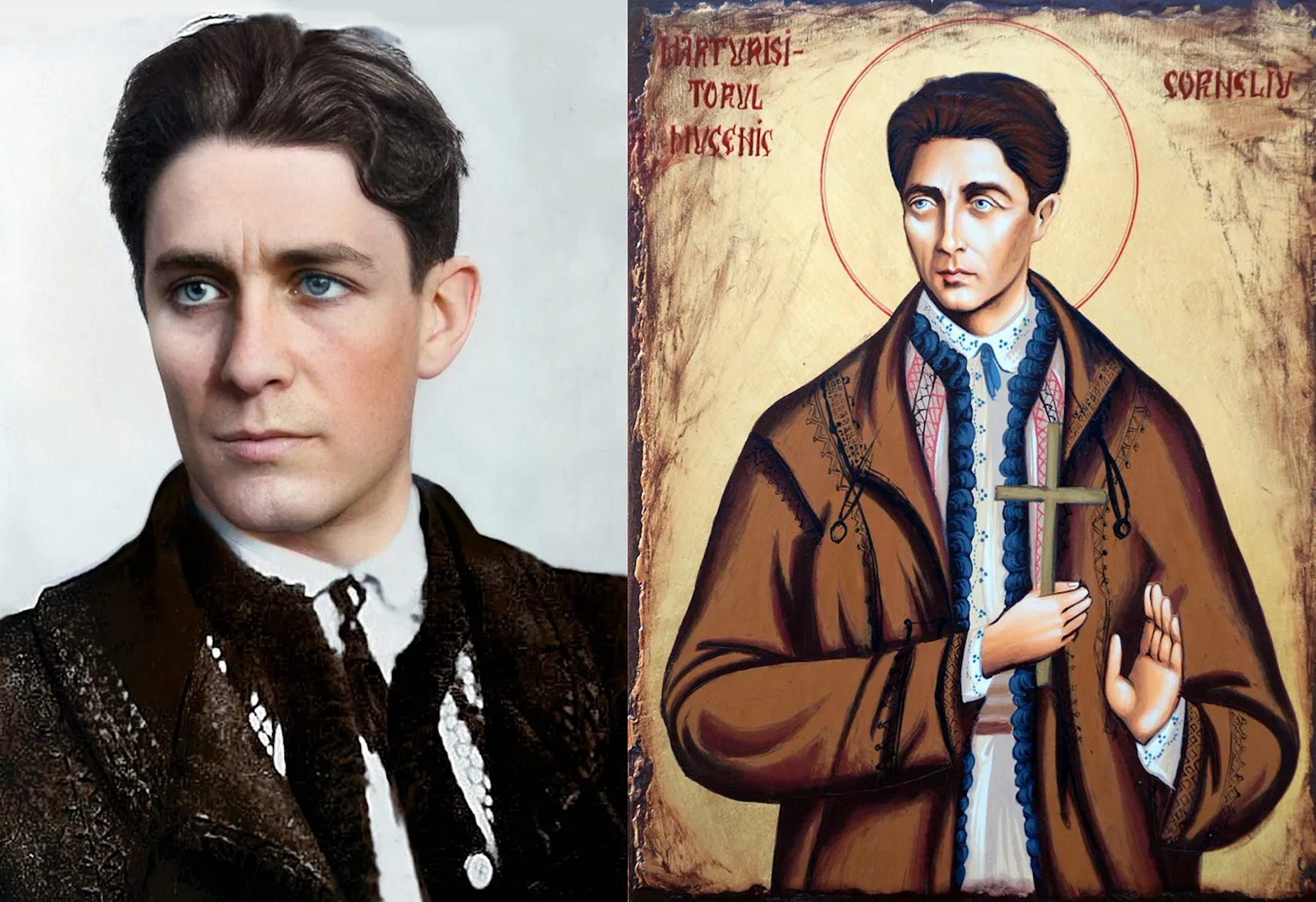
Yes, Romania still joined the Axis, and Romania was still a center of horrific atrocities. But rule by the Iron Guard would have been even worse — and the November 30 executions happily took that option off the table.
If my strategy is so great, why is it so rare? First and foremost, because peacemakers are relatively nice, and my strategy is ruthless. Even though Emperor Hirohito had the blood of millions on his hands, he was not personally cruel. Instead, he was weak, a people-pleaser — and the people who surrounded him were hawks (and people pretending to be hawks because they were afraid of the sincere hawks). If I were in Hirohito’s shoes, however, I say there’s an 80% chance that my strategy would have stopped Japan’s war of aggression before it started in 1931. Simultaneously summarily slaughtering your country’s hawks overnight doesn’t just remove them from the equation; it sends a message to the uncommitted that opposing peace is hazardous to your health.
Is my confidence in the efficacy of my strategy misplaced? Key point: In my hypothetical, I’m assuming a high level of crucial country-specific knowledge. When I muse, “If I were in Hirohito’s shoes…” I’m obviously assuming I can speak fluent Japanese. And I’m also assuming that I possess detailed knowledge of contemporary Japan’s institutions and personnel. These are unrealistic assumptions for Bryan Caplan, but totally reasonable assumptions for anyone in a position to try my strategy.
What about morality? Doesn’t killing hawks make you as bad as they are? Hardly. By assumption, they’re conspiring to wage unjustified war, so they deserve draconian punishment. Doesn’t killing the guilty without trial make you a murderer? No. If you genuinely know someone is guilty, trials are a matter of convenience, not morality. Aren’t trials the best way to find out if someone is genuinely guilty? Only sometimes. And if the fate of millions hangs in the balance, you shouldn’t fret about a few false positives. That’s mild deontology in action.
Couldn’t evil people use my strategy to do greater evil? Definitely, because evil people routinely use similar strategies to do greater evil. Fanatical dictatorships often target moderates and peace-makers. Wouldn’t they be even more inclined to do so if my strategy caught on? Maybe, but relatively virtuous leaders would also be more inclined to emulate my strategy if it caught on. The net indirect effect of more attempts and more prevention could easily be pacific.
Suppose I’m right. You could still say “Who cares? No one’s going to listen.” To which I have three replies.
First, even if no one listens, knowledge is valuable for its own sake. If my eccentric thesis about the ugly path to peace is often true, let it be known.
Second, my strategy doesn’t have to be widely accepted to add immense expected value. Indeed, if only one government in the next hundred years successfully uses my strategy to make a lasting peace, this will be my most valuable idea.
Last, if I’m right, there is a shocking moral corollary: Contrary to generations of apologists for “the poor leaders who had no choice but to drown the world in blood,” almost every leader does have a viable last-ditch path to peace: quickly and systematically round up your side’s warmongers and kill them without warning. The fact that so few leaders would even consider this option reinforces my long-standing claim that these “poor leaders” are in fact deeply evil. So evil that they would rather show mercy to a few hundred likely war criminals than protect millions of innocents.
This post assumes that leaders can tell the difference between “loyalists” and “war hawks.” Many are loyalists because they think that you are a war hawk, and this just assumes that they wouldn’t just turn on you and join the war hawks. Such a strategy is risky if you don’t want to be couped and killed.
Edit: it also assumes that there are any pure “loyalists” and not solely just war hawks. How do we know that?
My impression is that severe fanaticism was genuinely common in WW2 Japan. There was a low rate of captures relative to kills because they would fight to the death, and when defeat was certain engage in a "banzai charge" or, for officers, commit seppuku. Germany was a very different story, although Hitler wanted those at Stalingrad to fight to the death.