

Announcement: I arrive in Austin for my stint at UATX on May 12. On-campus gaming and karaoke begin almost immediately. Open to the public! Learn more and RSVP here.
In November of 2021, I wrote a piece called “The Upside of Covid,” talking about all of the lemonade I squeezed out of the lemon of the pandemic. But the piece never directly mentions the fact that, thanks to Covid, I became friends with Dwarkesh Patel. Now that his podcast has millions of subscribers, the New York Times has done a deep-dive profile. In the broad scheme of things, this is probably the very best thing to come out of my passage through Covid hell.
Where I enter the story:
Mr. Patel recorded the first episode of “The Lunar Society,” his original name for the podcast, from his dorm room at the University of Texas at Austin in 2020, during the early months of the Covid pandemic, when he was 19. He was taking online classes, bored, and thirsty for intellectual engagement. So he did what any normal college sophomore might do and cold-emailed Bryan Caplan, a member of George Mason University’s famously libertarian economics department. In the email, he described how three Caplan books had shifted his perspective on immigration, education and how many children to have. Mr. Caplan responded encouragingly, and after a further friendly exchange, Mr. Patel asked if he could interview him for a podcast. Mr. Caplan was impressed with the result. “He wasn’t just repeating 10 questions from everyone else. He had his own close-reading questions.”
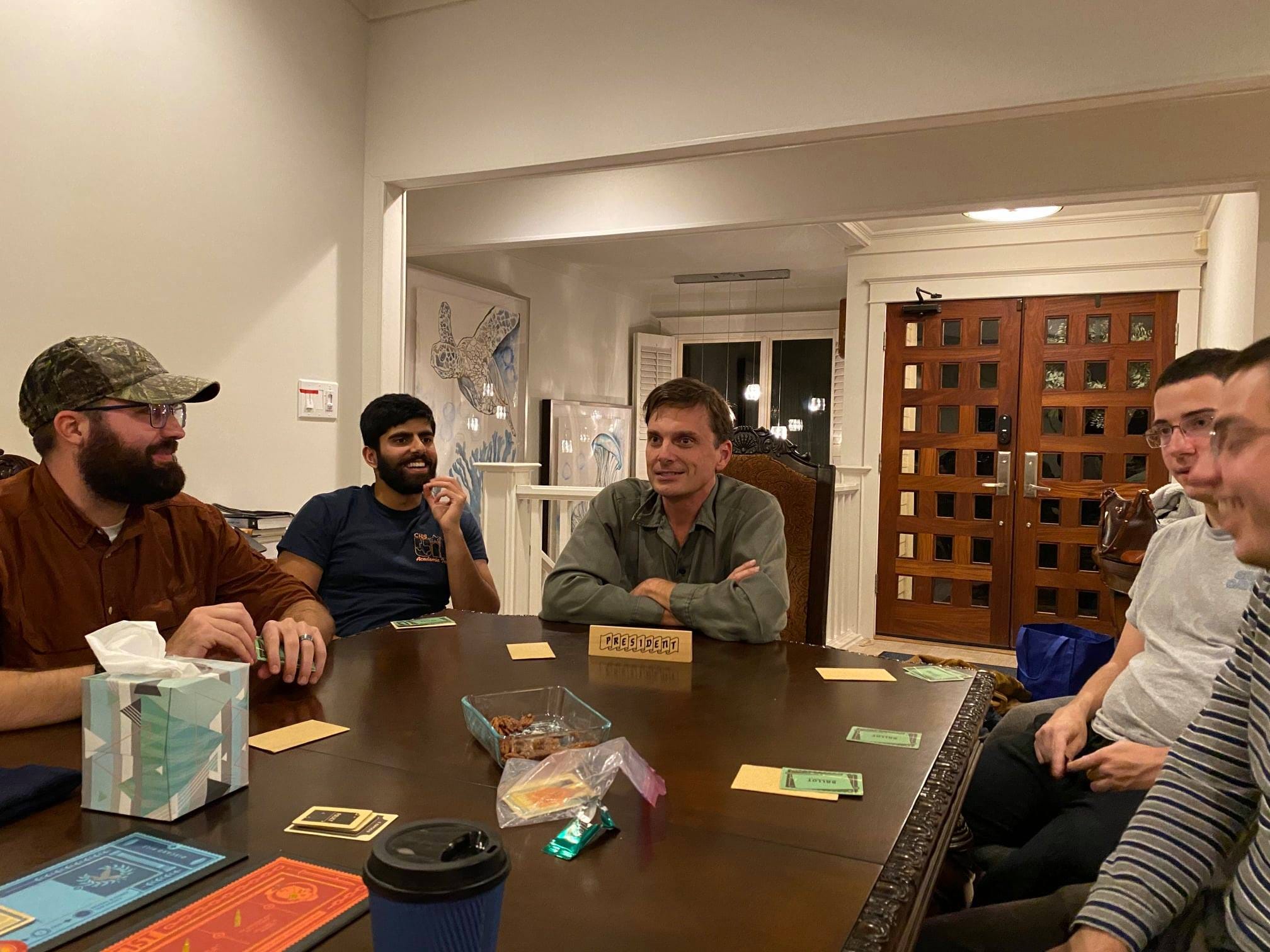
Mr. Caplan and his sons happened to spend a couple of months that summer in Austin, staying at the home of Steve Kuhn, the billionaire ex-hedge fund manager. Mr. Patel had lunch with Mr. Caplan nearly every day, and joined him at Mr. Kuhn’s house for pickleball (Mr. Kuhn founded Major League Pickleball), intellectual salons and role-playing games, including the Mr. Caplan-written “Badger and Skinny Pete,” based on two “Breaking Bad” characters.
Aside: You can play this game with me in Austin!
The profile goes on to explain Dwarkesh’s connection to Steve Kuhn (which I already knew about) and Anil Varanasi (which I remembered nothing about):
…Mr. Patel’s precocity was a magnet for mentors and benefactors. Mr. Kuhn offered to invest in the podcast in return for equity. “Even at that age,” Mr. Kuhn says, “he in some ways commanded the room in ways not many people do.”
Early on, when all Mr. Patel had to show for himself was a couple of blog posts and one podcast episode featuring Mr. Caplan, Anil Varanasi, co-founder of Meter, a network-infrastructure company in San Francisco, reached out and asked how much Mr. Patel would need to keep doing what he was doing for six months. (Mr. Varanasi, a former student of Mr. Caplan’s, has made similar overtures to other promising young people.) Not much, said Mr. Patel, who was then living with his parents in Austin. Mr. Varanasi sent him $10,000. Mr. Caplan opened the door to other interviews, including Tyler Cowen and other George Mason economists. Mr. Cowen, through his Emergent Ventures program, himself later gave Mr. Patel a grant.
Dwarkesh was actually the web designer for the beta version of Bet On It, though I’m still confused that he didn’t recommend Substack right off the bat.
One of my all-time favorite tweets goes, “Anytime you see me in public, please introduce yourself. Making friends has worked out swimmingly for me so far!”
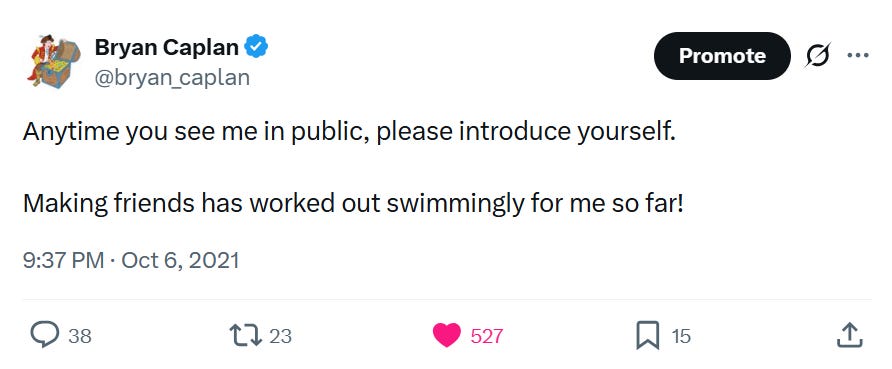
When I posted it, I knew that some benighted souls would predict disaster — a few with anticipatory schadenfreude. But as expected, my happy streak continues. What a privilege it is to know that I helped the great Dwarkesh get his start! He probably would have done just as well without me, but conceivably I really was the marginal factor. Regardless, I’ve made a wonderful friend. Congratulations for all you have and will accomplish and become, Dwarkesh.
While first place on the list of your most important accomplishments may go to *inducing many people to have more children*, there must also be a place on it for *helping Dwarkesh get started as a blogcaster*. He is great at it!
Are regular board game sessions still ongoing? Sounds fun!