

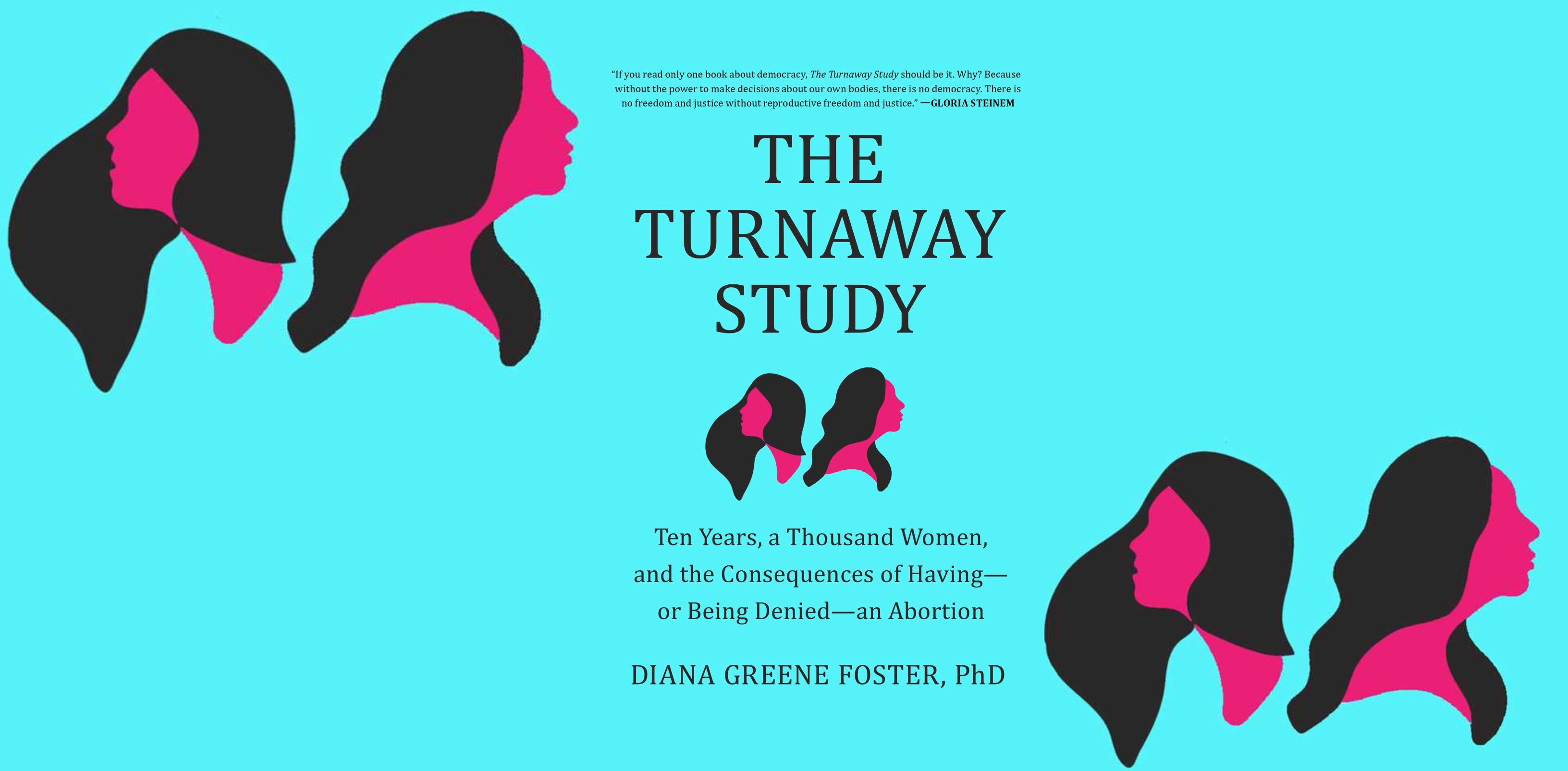
Near the end of Diana Foster’s The Turnaway Study, she warns readers that her findings have been misused in the past and are likely to be misused again.
Remember how some of the Turnaway’s Study’s findings have been willfully misinterpreted and taken out of context? Well, I have no doubt that will continue to happen. Some people will want to use Turnaway Study results to justify abortion restrictions and bans. They will point to the lack of long-term mental health harm of carrying an unwanted pregnancy to term to say that women are resilient. They might characterize the years of financial deprivation associated with raising a child compared to having an abortion as a small price to pay for bringing forth a new human life.
This is not an accurate takeaway of the policy implications of the Turnaway Study.
I was honestly puzzled when I read this passage. I can see how Foster could say, “The policy implications depend on your values, and I do not share the critics’ values.” But what is supposed to be “inaccurate,” much less “willfully misinterpreted”? Foster continues:
Yes. Women are emotionally resilient. But emotional resilience does not pay rent. Women who are denied abortions continue to report that they do not have enough money to pay for food, housing, and transportation for the full five years of the study.
Also:
Beyond the financial burden, taking away women’s agency to determine when and with whom they have children fundamentally changes their life trajectory. The Turnaway Study finds that women denied abortions scale back their life plans and end up in relationships that are not as good, even when they don’t stay with the man involved in the pregnancy.
And:
Preventing women from access abortion subjects them to the very serious risks of pregnancy against their will, threatens their health, and in a few cases, causes their deaths… There is no amount of emotional resilience that could have saved the two women in this study who died as a result of childbirth.
The key point, however, is that the self-reported measures of mental well-being ought to capture all of these moderate downsides. Foster’s finding is not that women denied an abortion have the same long-run overall life satisfaction as other women with the same financial and health problems. Her finding is that women denied abortion have the same long-run overall life satisfaction as otherwise similar women who got abortions and therefore avoided those financial and health problems. Upshot: The subjective gains of unplanned parenthood offset the objective problems of unplanned parenthood.
To be clear, overall life satisfaction measures fail to count the well-being for the women who died. But elsewhere in the book, Foster admits that those two deaths are clearly a fluke:
The two deaths translate to a maternal death rate of about one per 100 women… For comparison, the U.S. rate of death per live birth is 17 per 100,000 (.17%). So 1%, the rate in our study, is astronomical, 100 higher than national maternal death rates.
To repeat, I am a big fan of the Turnaway Study. But when I read her stilted take on her own results, I ask myself, “What findings, if any, would have led Foster to conclude that abortion is overrated?” What’s the point of precisely measuring the effect of abortion on poverty or health if you’re going to treat small negative effects as decisive arguments for the radical pro-choice view?
What’s the alternative? It would have been great if Foster had pre-registered (a) the magnitudes she expected to find, and (b) her policy recommendations as a function of those magnitudes. Thus, she could have said (a) “I expect that women denied an abortion will have overall life satisfaction a full point lower on a 1-5 scale,” and (b) presented a table like the following:
Actual Life Satisfaction Deficit Policy Recommendation
1.0 or greater Abortion on demand
.6 to .99 Third trimester bans only
.2 to .59 Roe v. Wade status quo
0 to .19 National 20 week ban
-.5 to -.01 National 15 week ban
-1.0 to -.51 National 10 week ban
-1.0 or less National ban
Key point: If your policy recommendations stay the same no matter what you find, it is disingenuous to claim that your findings “support” your policy recommendations. While I respect scholarship motivated solely by abstract curiosity, major studies like Turnaround are expensive. Why should donors pay all that money unless magnitudes matter?
I don’t understand Bryan’s interest in this study. He seems to be nitpicking. For example:
“ The key point, however, is that the self-reported measures of mental well-being ought to capture all of these moderate downsides. Foster’s finding is not that women denied an abortion have the same long-run overall life satisfaction as other women with the same financial and health problems. Her finding is that women denied abortion have the same long-run overall life satisfaction as otherwise similar women who got abortions and therefore avoided those financial and health problems. Upshot: The subjective gains of unplanned parenthood offset the objective problems of unplanned parenthood.”
How people feel is important, but so fundamentally subjective as to be of limited comparative value. There are studies of people experiencing severe trauma like the loss of a limb, spouse, or child. They seem to find that most people bounce back and are about as happy as they were before the loss. It would be foolish to conclude that the losses don’t matter because overall happiness in the subjects isn’t much different in the long run.
In the quote Bryan seems to say that while the women denied abortions are measurably poorer, that doesn’t really matter because they are about as happy as women who got abortions.
I mean, I presume Foster thinks women should have a fundamental right to bodily autonomy on purely philosophical grounds and therefore isn't going to base her ultimate policy proposals on a hypothetical sliding scale of misery. Why would she? If you think some practice is a positive social good for a wide range of reasons, then of course you'll always support it, but there's still nothing odd about highlighting what harms prohibitions do cause.