

Last week, I ran a guest post by St. Mary’s Alexander Craig replying to my claim that “Economics is Counter-Emotional, Not Counter-Intuitive.” Here’s my reply to his reply. Craig’s in blockquotes; I’m not.
I want to defend the idea that economics has some counter-intuitive propositions to offer. It does depend on what “intuitive” means, though. I think it’s fair to say that something is intuitive if someone without formal training in the area can think it through on their own.
That’s too high of a bar. I’d say “X is intuitive” roughly means “If you clearly state X to a person of average intelligence when they are calm, they quickly see that it is plausible.”
If it takes an economist re-framing the issue to show the answer makes sense, it’s not necessarily intuitive. In other words, economics can be made intuitive, but it takes effort and skill.
It depends on how much “re-framing” you need! If it’s just a few sentences, that’s good enough for “intuitive.” Think about reading Bastiat for the first time. If you stay calm and read closely, it makes sense in 3-6 minutes.
Here’s one proposition I think is counter-intuitive for most people: adding housing for rent at above-average prices can lower the average price of housing in a city. There’s an easy way to make this intuitive. Rephrase it as “Adding housing for rich people makes other housing available for poor people.” You could also say “Making landlords face steeper competition incentivizes them to lower rents.” I just don’t think the average person will immediately see that those propositions are as tightly interrelated as they really are.
I agree that it’s not “immediate.” But calm adults will agree in a matter of minutes. The problem is that most are too emotional even to listen.
As I’m sure you know, Elmendorf, Nall, and Oklobdzija found people have economically nonsensical views about housing economics and that their beliefs are mostly “non-attitudes” that aren’t consistent over time. They also found people change their beliefs when given an intuitive explanation like housing as a game of musical chairs. That doesn’t sound to me like people are just being emotional about it!
ENO’s effect sizes are quite modest. My story explains the vast majority of people who aren’t convinced.
Emotional attachment to a certain way of thinking would look like confirmation bias or under-updating in light of countervailing evidence.
Maybe. But the main thing that “emotional attachment” looks like is:
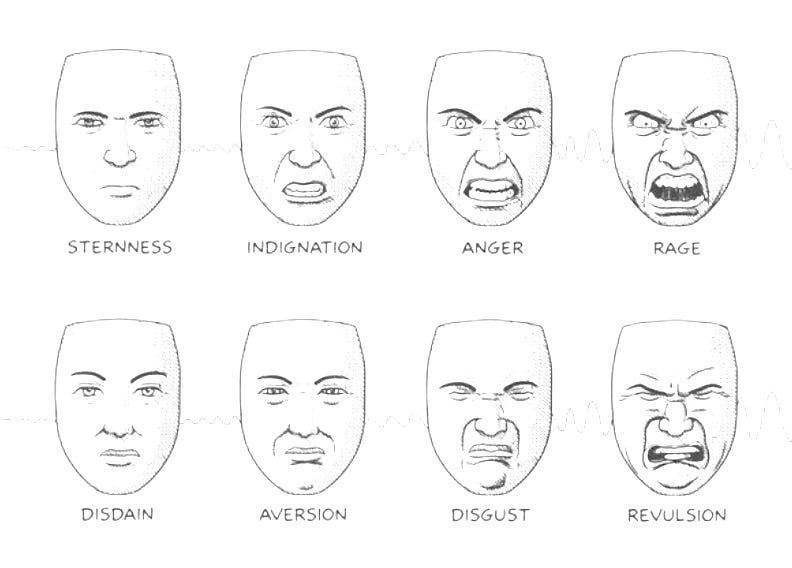
Basic economics makes psychologically normal humans angry and disgusted. Usually mildly, but the uglier the economic lesson, the more extreme the anger and disgust become.
This looks to me like people just don’t think about housing markets very carefully and rely on faulty intuitions.
They don’t think very carefully, but they still have strong opinions against, say, letting developers buy up townhomes in San Francisco to replace them with skyscrapers. Which is very weird. Why would anyone have strong opinions about issues they haven’t thought about very carefully? Because they’re relying on emotion instead!
Admittedly, those authors also found that people change their stated policy preferences more when given normative stories that directly address their moral concerns about developers, which could be taken as an emotional reaction. However, I think it’s also pretty rational to change your normative views when someone directly addresses something about them! It could easily be that people are lazy and intuitive about their descriptive beliefs but emotional and ideological about their normative beliefs. That doesn’t even strike me as necessarily a bad thing.
I’m tempted to reply, “It’s not just a bad thing; it’s the bad thing.” But that would be overly emotional on my part. My considered reaction is just: If lazily adopting strong opinions is “pretty rational,” your bar for “pretty rational” must be very low.
I think we’d agree that one of the biggest benefits of an economics education is simply being disabused of popular narratives that rely on lazy thinking, like imagining market profits predominantly come from taking advantage of others or that businesses with rising costs will choose to “make up the losses” by expanding volume.
Unfortunately, this rarely works. Even after a full semester of intro econ, we’re lucky if students parrot back these lessons on the final exam. Very few permanently embrace the economic way of thinking.
We agree, in other words, on the importance of rational irrationality.
A separate issue! But I affirm that people are much more likely to accept counter-emotional conclusions when the stakes are high.
I think where we diverge is that I believe people aren’t relying on mere emotional attachment to a certain implicit descriptive model of the world. The implications for our normative beliefs sound to me like your model would lead us to tell people to just be less emotional (slim chance!)
It is notoriously difficult to get emotional people to stop being emotional. But so what? A diagnosis can be exactly correct even though no effective cure exists.
whereas I think economists need to inject more sound economic thinking into our popular narratives. Less Rainbow Fish, more Tom Strong, perhaps?
I’m open to almost any form of marketing that works. But sadly, none work well on psychologically normal humans, because they are too emotional.
Alex
P.S. If basic economic thinking were so intuitive, surely it wouldn’t be in our intro courses? It would be unnecessary to teach, so surely we’d just move what was unintuitive in the advanced courses and put it in Principles!
As Ben Stein hilariously showed in Ferris Bueller’s Day Off, the typical economist is a poor teacher. But even the best economics teacher in the world needs a lot of time to convey highly intuitive information if the students feel anger and disgust toward the material.
I agree emotions are the probably the most important factor, especially in politics.
But even absent emotions, I find that most people struggle to think like an economist consistently. Even a moderate increase in cognitive load, or a shift in context, can interfere with their ability to apply economic reasoning.
For example, I don't think most people find thinking in trade-offs to be intuitive. They understand the concept plenty well in the abstract. But then you get in a business meeting and people say "let's be good at X, Y, and Z" and you say "we should probably neglect X so that we focus on Z" and if neglecting X is not a conventional thing to do then you will be met with confused looks. People are eventually forced to make trade-offs but they stumble into it more than it being a result of deliberate planning.
"I’d say 'X is intuitive' roughly means 'If you clearly state X to a person of average intelligence when they are calm, they quickly see that it is plausible.'”
That is profoundly wrong. You are talking about logic, not intuition. Intuition means people get it without having to think about it or have it explained. See, for example, the great book The Design of Everyday Things, wherein the author explains that now matter how well something works, regardless of how logical it is, if it requires explanation for people to operate it, it's not intuitive.
Your mistake is confusing or conflating logic and intuition, whereas intuition is pre-cognitive, so pre-logical.
Economics certainly is logical. But intuitive? No, you only think so because you fail to make the crucial distinction between logic and intuition.