

My former student Michael Crone sent me these critical comments on my recent pieces on abortion and adoption. Enjoy!
Bryan has generously offered me the opportunity to write a response to his series of recent posts on abortion and adoption.
In his post on the morality of abortion, Bryan Caplan wrote:
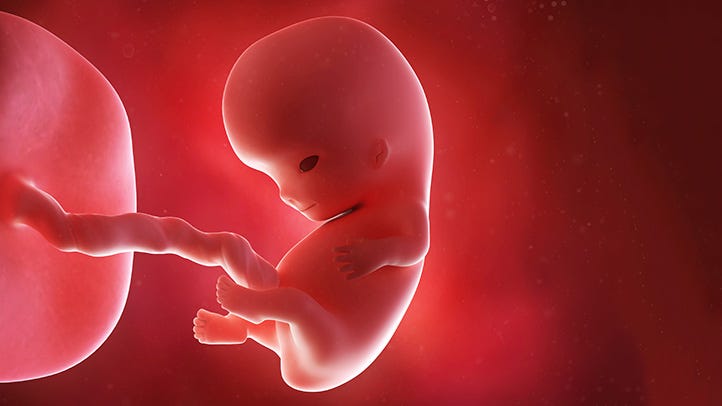
The radical pro-life position — “Abortion is as immoral as murdering a baby” — is easily refuted with a simple thought experiment. Namely: If you could either save one human baby from a fire, or a dozen human embryos, what are you morally obliged to do? Almost no one even claims they should choose the embryos over the baby — and virtually no one would in fact do so.
Why not? Because almost everyone recognizes that an embryo has far less moral worth than an actually-existing baby.
As Caplan anticipates, I don’t claim that one should choose the embryos over the baby. However, I do dispute that his thought experiment proves what he says it does. His hypothetical is basically equivalent to “Our ship is sinking. There aren’t enough seats on the lifeboat. Who should we save?” which is not the same question as “Who has moral worth?” and does not relate to the abortion question, except to save the life of the mother. It’s so unrelated to the abortion question, that I hesitate to address my reasons for choosing the baby, lest it become the focus, but:
Embryos in the situation Caplan described are unlikely to be successfully implanted and grow up, at least with our current technology. This makes a huge difference and again doesn’t match the abortion question. If we change the thought experiment world to one where the embryos are likely to grow up – say, for example, that we have widespread artificial womb usage – my response, and I think a common response, is that one should choose the embryos. (I recognize that QALY-based thinking leads to some conclusions that most people including me wouldn’t accept, but I think the common moral intuition is what I can only call QALY-ish on this particular question.)
Caplan goes on to argue that a fetus has intermediate moral value and that this, combined with the Turnaway Study, which shows little difference in life satisfaction between those who seek but are denied abortion access and those in a similar situation who have an abortion, means abortion is morally wrong, with some possible extreme exceptions. It seems that Caplan left some steps out going from an embryo to a fetus of the age where abortions occur, but that’s more of a technical point. Mostly, it’s very nice to see Caplan, who doesn’t have a dog in this fight, look at the Turnaway Study and come to basically the same conclusion that Secular Pro-Life did.
Caplan concludes:
That said, what are the implications for the legality of abortion? Even now, I remain undecided. I have a strong libertarian moral presumption, which implies a presumptive right to do wrong. The unborn are only of intermediate moral value, so maybe we should respect the right to wrongly abort. On the other hand, if abortion were currently illegal, it would be near the bottom of my list of liberalizations to prioritize. And if Sunstein-Thaler ‘nudges’ are ever justified, they’re justified for abortion.
I know this is a quixotic essay. Almost everyone has long since made up their minds, and I’ll probably anger both sides. So why write it? My stock answer: Because I have something original, important, and true to say. Hysterically aborting your baby because you falsely believe the baby will ruin your life isn’t merely morally wrong; it is tragic. Why? Because before long, you almost surely would have loved that baby.
I dispute that everyone has made up their minds, but, leaving that difference aside, my mind has been long since made up, and I enjoyed this essay. Our hope lies in people looking at the situation rationally, which is shockingly rare on this issue.
Furthermore, Caplan’s main conclusions are reasonable given his premises and merely accepting his premises are enough to largely come to the correct conclusion. If everyone read Caplan’s essay, took it to heart and acted on his conclusions, then we would be at least 90% of the way from where we are now to the better world that I believe would be just and right, even if no one agreed with any of my rebuttals to the essay.
In an earlier post, Caplan proposed eliminating the welfare state as a means to increase adoptable infants.
Hidden among the responses to his post is data suggesting that eliminating abortion would bring about a massive increase in adoptable babies. Elizabeth Kirk and Ryan Hanlon, in a response to Caplan’s argument, wrote “For every child placed for adoption, approximately 70 other women choose to rear the child as a single parent, and 50 other women choose to terminate the pregnancy.” In a different response, Steven Salop wrote “One study found that among women denied access to abortion, only about 10% chose adoption, so simply prohibiting abortion is not the best route to supporting expanded adoption.”
While knowing the best route to expanded adoption is difficult, the data presented imply prohibiting abortion would be a very powerful force for expanded adoption. The two quotes in the previous paragraph suggest, admittedly naively, a 500% increase in infants available for adoption if abortion disappeared – for every child placed for adoption, an additional 5 (10% of 50) would choose adoption if denied access to abortion. Additionally, adopting would become even more common in this scenario since, as Caplan put it, “conformity pressure would soon shift norms in functional ways.”
Salop also argues that “increasing support (not just child support and other welfare payments but also other interventions) would be a less draconian way to improve the outcomes for non-adopted children.” To which Caplan replies, “Yes, but with all the standard drawbacks and objections.”
I’m not sure what Caplan thinks are “the standard drawbacks and objections”. The most obvious drawback to me is that these interventions are not free. I have and continue to support a revenue-neutral way to help parents and children – transferring education funds to caregivers. I’m curious what Caplan and any of his other responders would say to my proposal.
Finally, Caplan, in his post on adoption, quoted his book Selfish Reasons to Have More Kids:
Bringing kids to the First World often saves their lives. Over 13 percent of the children in Malawi—the African nation that initially denied Madonna’s petition to adopt a four-year-old orphan—don’t survive their first five years.
In the USA, 199/1,199, over 16% of children, don’t make it to birth. Abortion is illegal in Malawi except to save the life of the mother. Malawi is likely slightly better on survival statistics up to age 5.
Technically, the abortion statistics don’t relate to Madonna’s case, since the child was already born. Caplan’s statistics are only barely related, since the child was almost through its first 5 years. The relevant issue is length and quality of life in the child’s future, which likely does favor moving it to the global West (as Bryan goes on to argue, with more apparent certainty than I have). So why do I bring this up? For humility, or at least something like humility. Even among people in the global West who think abortion is horrible (perhaps even disproportionately among such people), there is a tendency to memory hole the unborn and think our civilization so very superior. I find it important to push back on this.
I fully agree with Michael - the burning IVF clinic (or building with a random box of embryos in it) scenario is a complete non sequitur. What if instead it was a choice between two babies, but only one of them is yours? Would that prove that the other child doesn't have 'sufficient' moral worth, and therefore we should be open to it being legal for their mother to kill them? Of course not.
Or what if it was 2 babies, one of whom you had met a few times before? I wager that most people would save the one they recognise, even if they have no familial obligations. Does that mean we can kill the other one? Cousin vs aunt? Bryan Caplan vs Michael Crone? They're all non sequiturs.
BONUS: what if the choice was between a baby and the last 500 fertilised embryos on earth (for which artificial wombs had been fully prepared elsewhere), and you and the baby are the same sex and are the last remaining born humans on earth? Would you choose the baby and let humanity end, or the embryos and keep the human race alive? Again, if somebody chooses the embryos, does that mean the baby's parents should be legally allowed to kill it?
I do not mean to be too harsh, especially since I really like Bryan. However given that he seems to be trying to stake out some 'middle ground' position on bringing death to masses of innocent human beings, I believe the ridicule is wholly justified.
Thank you both on this, good read and response. I especially found the Malawi framing novel and never thought about it that way. And I'm not even a secular pro-lifer, in fact I'm a legamoron spiteful pro-choicer to the point I'm legally ok with abortion up until the seventy-first trimester though morally I'm a religious pro-lifer.