

“The death penalty deters murder.” A classic right-wing idea. So classic, in fact, that it’s tempting to think that the idea of deterrence itself is right-wing.
Yet on reflection, that’s absurd.
The left strongly believes in deterrence for discrimination. If you said, “Let’s cap discrimination damages at $1000,” they would predict a massive increase in discrimination.
The left strongly believes in deterrence for pollution. If you said, “We should let first-time pollution lawbreakers off with a warning,” they would predict a large increase in pollution.
The left strongly believes in deterrence for tax evasion. If you said, “Let’s end jail time for tax offenses,” they would predict a large reduction in tax collection.
What’s the common thread? The straightforward answer is: “Everyone strongly believes in deterrence for behavior they abhor.” The right abhors violent crime, so they think that “lock-’em-up-and-throw-away-the-key” will sharply reduce violent crime. The left abhors discrimination, pollution, and tax evasion, so they think that harsh penalties – including jailtime – will sharply reduce discrimination, pollution, and tax evasion. The left will almost surely never embrace rehabilitation for billionaire tax cheats.
On further thought, however, this straightforward answer is incomplete. How so? Because people are also quick to assume that behavior that they support is highly responsive to deterrence! Consider:
The right strongly believes that high taxes deter work.
The left strongly believes that anti-abortion lawsuits deter abortion providers.
The right strongly believes that twitter mobs deter right-wing speech.
The left strongly believes that holding unions liable for strike-related property damage will discourage unionization.
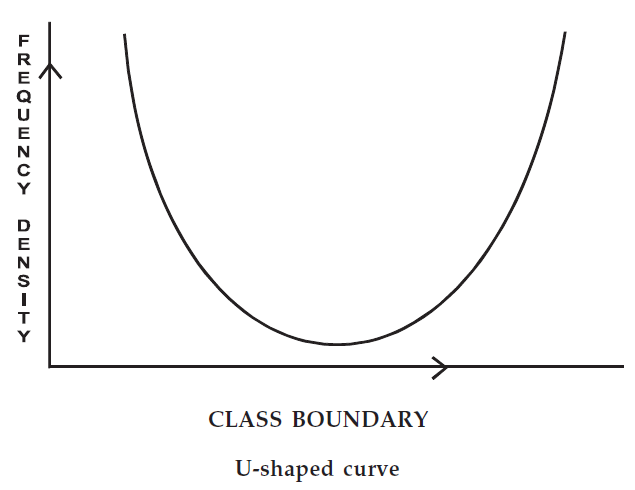
Once again, the motivated reasoning is palpable. Previously, though, the motivated reasoning said, “Deterrence will sharply reduce whatever I abhor.” Now, in contrast, the motivated reasoning says, “Deterrence will sharply reduce whatever I adore.” Apparently the only thing that doesn’t respond to deterrence is whatever leaves you unmoved. If you put “How you feel about X” on the x-axis, and “How much do you think X responds to deterrence” on the y-axis, you get a U-shaped curve that reaches its minimum around X=0.
Lunacy? Definitely. But there is a method to this madness: People seek to minimize the punishment of what they like, and maximize the punishment of what they dislike. If they like it, they fret, “Even the slightest punishment puts it in mortal danger.” If they dislike it, they gloat, “With vigorous punishment, we can wipe this off the face of the Earth.”
A strange implication: The big ideological disagreements about the efficacy of deterrence rarely arise when both left and right strongly care about X. Both sides agree that laws against abortion will sharply reduce abortion; they just disagree about whether sharply reducing abortions is really good or really bad.
Instead, the big ideological disagreements about the efficacy of deterrence arise primarily when one side cares about the problem and the other is apathetic. Take violent crime. The right cares about it a lot; the left doesn’t. Hence, the right claims that deterrence sharply reduces violent crime, while the left is skeptical. Or take discrimination. The left cares a lot; the right doesn’t. Hence, the left claims that deterrence sharply reduces discrimination, while the right is skeptical.
If ideology is objectively useless for estimating the efficacy of deterrence, what’s the alternative? Ideally, of course, we would defer to high-quality social science. Yet for most deterrence-related issues, alas, high-quality social science barely exists. If we almost never use Voluntary Human Experimentation to measure the efficacy of masks, we’re probably not going to use Voluntary Human Experimentation to measure the efficacy of $1000 fines for failure to wear masks.
So what’s left? Almost all of what we really know about deterrence simply comes from introspection – and listening to the introspection of others. Not on the politically-charged question of, “How much does deterrence change society,” but on the common-sense question of, “How much does deterrence change you?” Introspection is far from perfect, but compared to motivated ideological reasoning, it’s rocket science.
The post appeared first on Econlib.
Seems like the probability of consequences, be they positive or negative, plays a role.
I don't buy this, it's the specific effect of the death penalty that the left object to, and they seem to think that it might not be any more effective than long prison times. I don't know any lefties who think the appropriate penalty for murder would be a fine.
On this issue I'm a right winger and would support the death penalty, as I think are most of my fellow citizens. But I also don't think it would be much more of a deterrent than a lifetime in prison. On personal introspection I find the idea of a lifetime in prison, prevented from committing suicide, much worse than the idea of being executed. But I appreciate that that's not how everybody feels. If it was I'd be in favour of long prison sentences.
I think the left genuinely worry about the idea of executing innocent people. For me the chances of getting a reprieve in such cases seem about commensurate with the chances of being wrongly convicted in the first place, justice systems always make mistakes. So it's a wash.
Definitely the right seem to be more in favour of harsh prison sentences for almost all crimes, but I think that the right see crime as a matter of personal evil, whereas the left see thieves at least as victims of an unjust system.
It's probably the same with tax fraud, but mirrored. Not much to explain there, surely?