

I don’t think I took more than four taxi rides in my entire childhood. While part of the reason is that my parents were cheap, taxi rides really were crazy expensive. In 1990, I sweat bullets watching the taxi meter for a thirty-minute ride from SFO rise to about $60. Inflation-adjusted, that’s $155! That was six weeks of pay for my part-time job.
My kids, in contrast, have taken rideshares hundreds of times. Which got me thinking: How typical is my experience? So I went to ChatGPT and asked it to estimate passenger miles traveled in traditional taxis versus rideshares since 2000. The results seem credible, yet they blew my mind. I like the table version best, because it builds suspense.
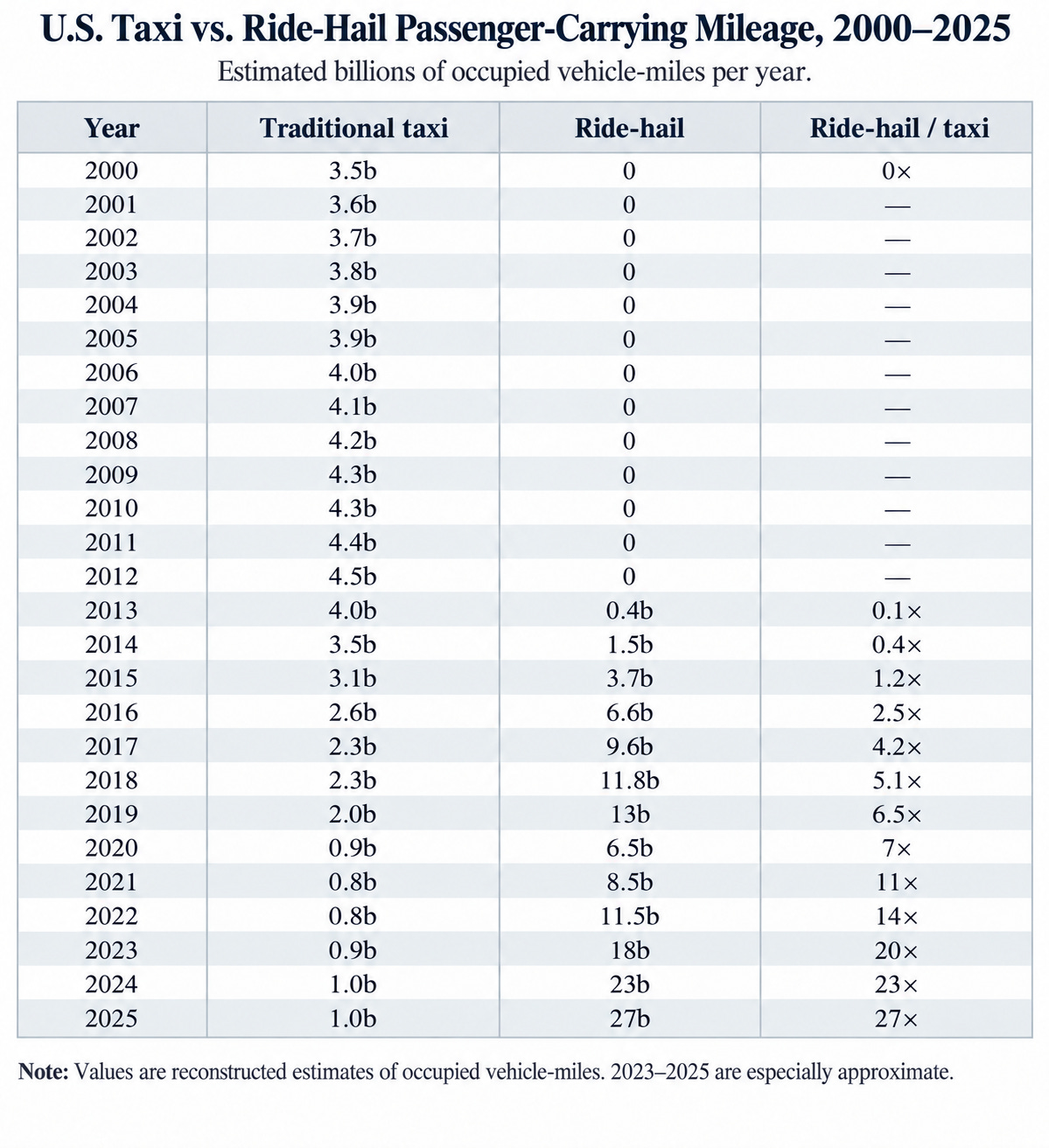
But you can view it in figure form if you prefer:
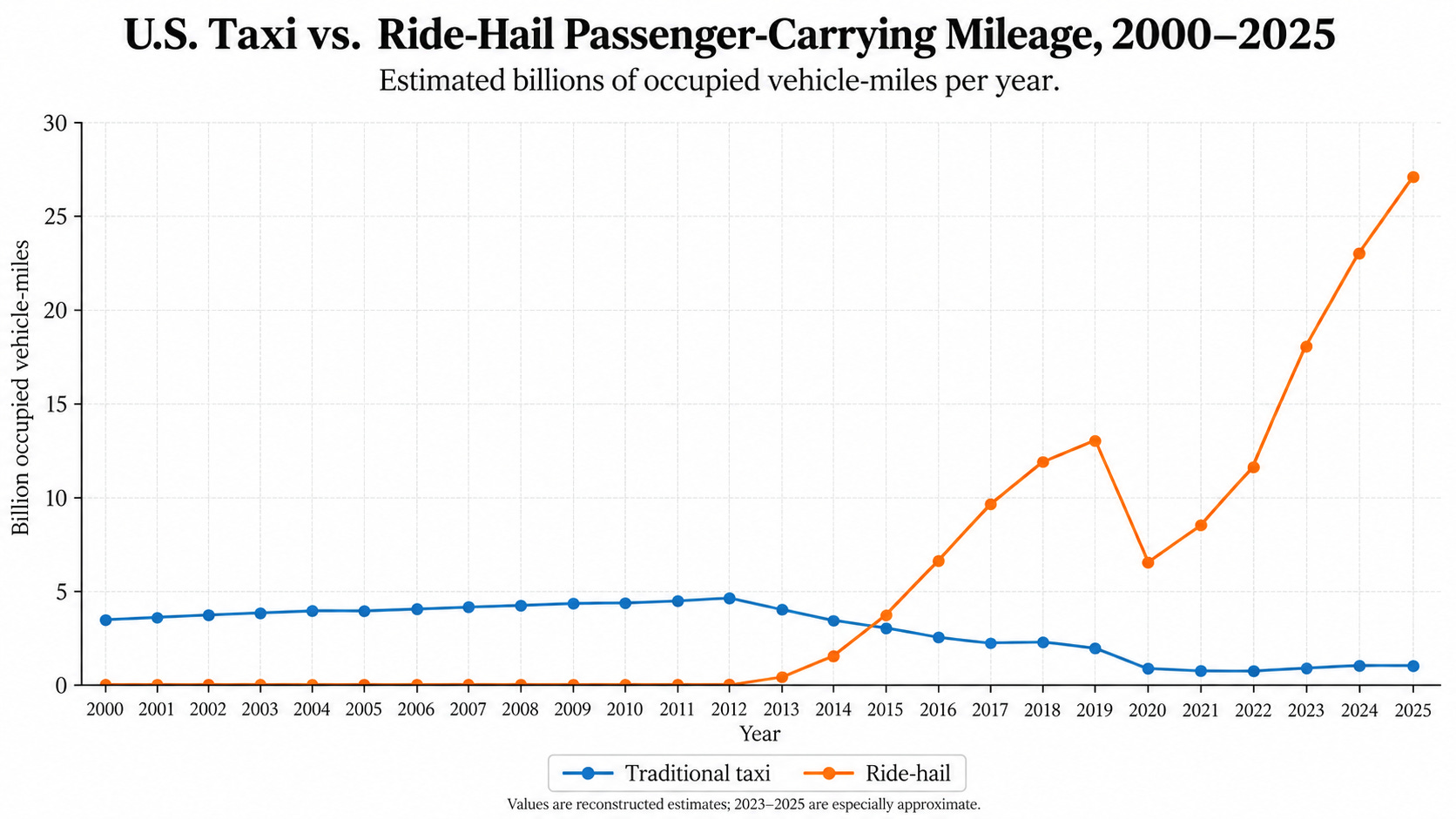
This is one of the clearest demonstrations of positive-sum change I know of. Yes, Uber devastated the taxi industry. But they didn’t just “drink their milkshake.” They made six additional milkshakes in the process. The combined effect of a massive price cut and a massive convenience boost multiplied vehicle miles roughly seven-fold. Who would have imagined that demand could be so elastic?
Last week, Alex Tabarrok gave me my first ride in a driverless car. The technology took way too long to arrive thanks to government, lawsuits, and paranoia. But it’s finally here, and it’s fantastic. 9/10. In the next ten years, we’re going to see another Uber-sized revolution in transportation.
Consider: The cheapest self-driving Tesla is a bit under $40k. A car that netted just $100 a day would pay for itself in about one year. Subtracting downtime for charging, they could be on the road 20 hours a day, and probably remain usable for 10 years. Even if they’re empty half the time, and energy and maintenance double the cost of the car itself, the equilibrium price is about $2 an hour. Truly, it wouldn’t be surprising to see paid miles multiply another 7x.
The main risk is that the federal government regulates this technology into the ground. But now that self-driving cars are already on the road, we’ve probably escaped. It’s a perfect time to go full Magneto on the status quo and gloat, “You should killed me when you had the chance!”

"Who would have imagined that demand could be so elastic?" Any New Yorker paying attention. When a taxi medallion was "worth" $1 million, it was pretty obvious that their was some monopoly pricing going on. It will be interesting to see if I can buy a robotaxi for personal use and then rent it out while I am not using it.
Elon abundifies everything he touches.