

When they hear about awesome yet unlikely policy reforms, one of economists’ favorite reactions is to shrug and sigh, “But there’s a huge credibility problem.”
Why not promise foreign investors that they'll never be expropriated? “Credibility. Investors know that after they invest, you’ll reverse the policy.”
Why not deny immigrants welfare benefits for life? “Credibility. Natives know that once the immigrants are here, they’ll soon pressure us for equal treatment.”
Why not allow people to give up Social Security benefits in exchange for lower taxes? “Credibility. Americans won’t tolerate senior citizens living on the streets.”
Citing “credibility” makes economists sound wise, and laymen sound like wise economists. Yet on reflection, most credibility arguments are foolishly obtuse. Why? Because there is a vastly more important reason why awesome policy reforms are unlikely to happen — a reason that makes credibility arguments moot.
What could this vastly more important reason be? Simple: Psychologically normal humans — and the demagogues who rule them — hate the basic idea. They wouldn’t want to do it even if they knew it would work.
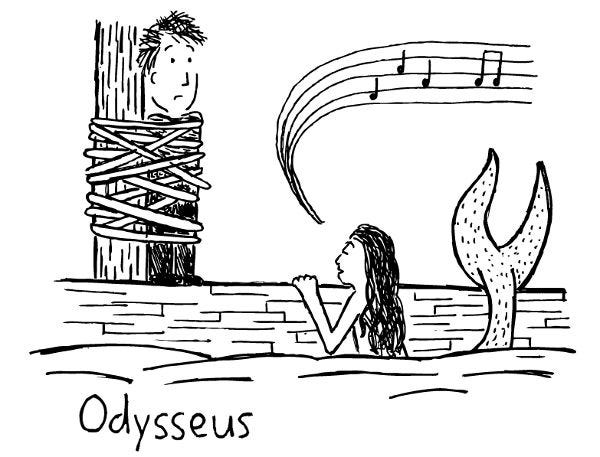
To see what I mean, imagine how you would talk if you really wanted to lure tons of foreign investors, then expropriate them. You wouldn’t just privately promise, “We’ll never expropriate you.” You’d give loud speeches promising to respect the rights of foreign capital. You’d abase yourself: “Only fools call foreign investors exploiters. Our country is poor because we are sorely lacking in managerial talent. We need to stop glorifying our country’s long record of failure and stop scapegoating foreigners.” You’d plaster your contempt for nationalism and socialism all over your country — and make such contempt the keystone of your schools’ civics curriculum. You’d create an oversight board of foreign corporations, giving them the power to overrule national law.
If a government actually went all-in on this strategy, they probably would attract tons of foreign investment. At minimum, there’s a 10% chance it would work: “These guys sound like they’re for real.” But essentially no government on Earth has ever tried it. Why not? Because most leaders would rather attract no foreign investment than humiliate themselves. And even leaders willing to swallow their pride would expect this strategy to be extremely unpopular.
The same goes for permanently denying immigrants welfare benefits. If you were serious about this idea, you would loudly proclaim your commitment. You would make would-be immigrants record and public post videos saying, “I freely and fully accept that I am coming here to work, not to burden American taxpayers.” You would create bright red Guest Worker cards stamped, “Permanently ineligible for welfare.” You would create an oversight board of Cato Institute alumni, dedicated to the proposition that we should build a wall around the welfare state, not the country.
If a country went all-in on this strategy, the expected value of welfare payments to immigrants really would crash. Would it last forever? No, because no policy lasts forever. But the welfare eligibility restrictions would have a life expectancy of 30-60 years, much like other major policies. And in present value terms, that’s almost as good as forever.
There’s just one problem: At least in Western democracies, almost all leaders and voters would be horrified by this policy. They would simper about “second-class citizenship” and the equality of man. Which, strangely, implies that it’s perfectly fine to deny Haitians the right to accept a job from a willing American employer. But I digress.
Allowing people to waive their right to Social Security benefits faces the same pitfall. “Credibility” is pure distraction. The problem isn’t that this is a tempting policy that would be reversed in the long run. The problem is that for psychologically normal humans, this policy isn’t tempting! At all. They love the idea of “guaranteeing a dignified retirement to every American” — and they’re barely interested in saving money. “It’s not about the money.”
I freely admit that there is a small subset of issues where credibility problems are genuinely important. Most notably, my teacher Ken Rogoff famously explained that independent central banks use their credibility to reduce inflation without hurting the real economy. The distinguishing feature of this small subset of issues, however, is that they are technical, hence boring. Few politicians, and even fewer laymen, feel strong emotions about monetary policy. As a result, insiders are fairly free to act strategically, so credibility issues — and institutional remedies for credibility issues — finally come into their own.
As long as the issues are juicy, however, credibility barely matters. Yes, thinkers who talk about “credibility problems” have high IQs. But this is genuinely an issue where EQ matters more. If awesome policy reforms are sitting on the shelf collecting dust, the reason is rarely subtle or strategic. With rare exceptions, the reason is simply that the awesome policy reforms are widely hated. Despite their merits, or even because of them.
There is not much difference between your view and that of the credibility theorists. They are saying: “The policy is unpopular (obvious, since it is not, and is not close to being, in place); and even if you could temporarily institute it—sneaking it past the voters—before long its inherent unpopularity would rise to the fore, and it would be reversed.”
You're ignoring that politicians and bureaucrats do not want to solve the problems that created and maintain their jobs. That's the last thing they want. The first thing they want is to wring every possible drop of blood out of every little problem, to get more votes, bigger budgets, more subordinates, and the opportunity to issue more regulations to prove they are working on the problem.
The gullible public assumes that means working to solve the problem. Everyone with any common sense knows it means they are working to exacerbate the problem.