

You get hungry every day — and feeling hungry hurts. If you’re hungry enough, it’s hard to work, much less enjoy life. If you stay hungry for too long, you collapse. And then you die.
But don’t despair. Food, the remedy for hunger, doesn’t merely exist. It is almost always nearby, and is amazingly cheap. A single 16-ounce box of pasta has a full day’s worth of calories, and you can get it for about a dollar. One dollar to not feel hungry. One dollar for a day’s worth of energy. One dollar a day to keep living day after day. The value of your food is overwhelming — yet the cost is a rounding error.
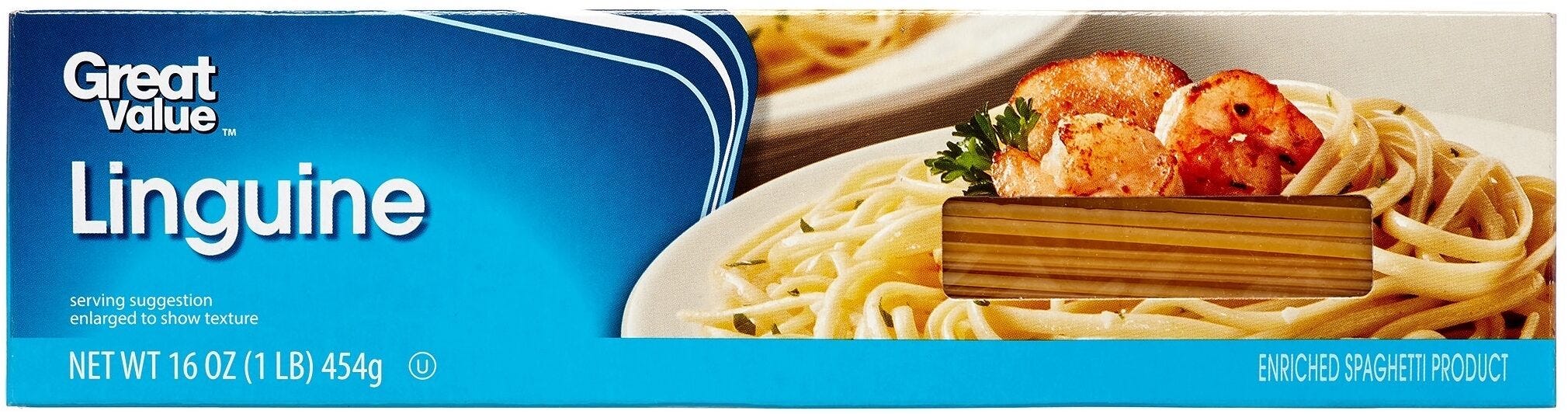
The incurious and ungrateful will furrow their brows and say, “So what?” But if you dwell on this homely fact with an open mind, you will eventually reach an epiphany: The fact that a dollar’s worth of food can satiate your hunger, fuel your day, and preserve your life is a bona fide miracle. A miracle we take for granted. A miracle most mundane. Yet a miracle nonetheless.
And once you appreciate this miracle of sustenance, endless streams of similarly miraculous facts come into focus. Water is usually free of charge, even though water is even more vital for comfort and survival than food. Air is almost always gratis, even though you’ll be dead in minutes without it. Your closest relatives and friends may matter more to you than your own life, yet you’ve probably never faced even a 1% risk of death on their behalf.
The underlying principle behind all of these miracles is the most fundamental principle of economics, the principle every introductory econ class should spotlight on day one. Namely: Value is not cost. Value is what you get; cost is what you pay; and they are not the same. Not even close.
In this world of ours, some things have immense value and immense cost, like a cure for aging.
Some things have trivial value and trivial cost, like a speck of dust floating through the air in front of you.
Some things have trivial value and immense cost, like a mud pie a hundred miles wide.
And finally, some things have immense value and trivial cost, like food, water, and air.
Value is not cost. It is thanks to this simple principle that life is worth living. Randomly selected things are not worth having, and randomly selected actions are not worth doing. But if you look around, you’ll soon notice things and actions where the value far exceeds the cost. Acquire those things, take those actions, and you will live long and prosper.
On the first day of Econ 1, most teachers introduce the concept of opportunity cost. It’s not a bad choice, but it’s not the best choice. The insight that “Value is not cost” is much more fundamental than making sure that you count cost correctly. Indeed, it is no exaggeration to say that “Value is not cost” contains the meaning of life. Go forth and find everything that is worth finding because its value exceeds its cost; leave the rest.
I know that the critics of economics will be at best bemused by my observations. Even now, I can hear them saying, “Trivial!” and “Banal!” But that’s because they imagine that obvious-once-you-think-about-it insights can’t be deep. And that’s totally wrong. “Value is not cost” is a shining, self-referential example of the principle that value is not cost. One short essay is enough to explain this everyday miracle. Yet once you take “Value is not cost” to heart, you can and should take advantage of the miracle every day of your life. And give thanks that we live in a world so full of miracles.
Value to cost comparisons are great, especially in the political sphere. Government policies often carry huge costs, while being value subtractive.
A valuable philosophical essay, which you made available to me at *very* low cost, whatever it cost you to produce it. It provokes thoughts about measurement: costs are routinely measured in monetary terms—easy for items with a *market value*, though there may sometimes be substantial non-market costs of obtaining them. But markets seem irrelevant to values; nevertheless, can the latter also be measured in money?