

Summary
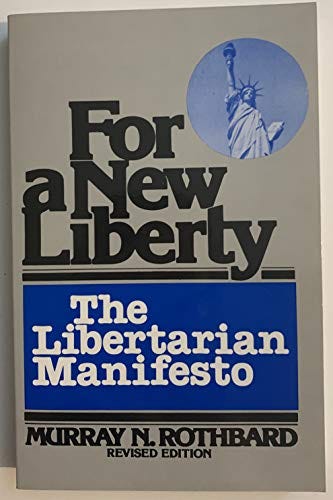
In 1973, when the first edition of For a New Liberty was published, Keynesians were still sitting pretty. Five years later, the Keynesians had so much egg on their faces that Rothbard was inspired to add this entirely new chapter on “Inflation and the Business Cycle: The Collapse of the Keynesian Paradigm” to his revised edition. Rothbard begins by pointing to the rise of stagflation, and the three big questions that it raises:
(1) Why the chronic and accelerating inflation? (2) Why an inflation even during deep depressions? And while we are at it, it would be important to explain, if we could, (3) Why the business cycle at all? Why the seemingly unending round of boom and bust?
He then assures readers that Keynesianism can’t explain answer these questions, but the neglected the Austrian theory of the business cycle (henceforth ABC) can.
Rothbard begins with a lucid analysis of inflation:
The favorite explanation of inflation is that greedy businessmen persist in putting up prices in order to increase their profits. But surely the quotient of business “greed” has not suddenly taken a great leap forward since World War II. Weren’t businesses equally “greedy” in the nineteenth century and up to 1941? So why was there no inflation trend then? Moreover, if businessmen are so avaricious as to jack up prices 10% per year, why do they stop there? Why do they wait; why don’t they raise prices by 50%, or double or triple them immediately? What holds them back?
After considering some flawed explanations, he leads the witness to the right answer: The crucial factor is consumer demand; consumer demand keeps rising because the money supply keeps rising; and the money supply keeps rising because government keeps printing more money. Its motive, according to Rothbard, is seigniorage:
Consider what would happen if the government should approach one group of people–say the Jones family–and say to them: “Here we give you the absolute and unlimited power to print dollars, to determine the number of dollars in circulation. And you will have an absolute monopoly power: anyone else who presumes to use such power will be jailed for a long, long time as an evil and subversive counterfeiter. We hope you use this power wisely.” We can pretty well predict what the Jones family will do with this newfound power. At first, it will use the power slowly and carefully, to pay off its debts, perhaps buy itself a few particularly desired items; but then, habituated to the heady wine of being able to print their own currency, they will begin to use the power to the hilt, to buy luxuries, reward their friends, etc. The result will be continuing and even accelerated increases in the money supply, and therefore continuing and accelerated inflation.
But this is precisely what governments–all governments–have done. Except that instead of granting the monopoly power to counterfeit to the Jones or other families, government has “granted” the power to itself.
After explaining the mechanics of fractional reserves and central banking, Rothbard finally presents the uniquely Austrian part of his story: Expansionary monetary temporarily reduces interest rates, and business responds by making investments that, due to the reduced interest rates, now appear profitable:
For businessmen, seeing the rate of interest fall, will react as they always must to such a change of market signals: they will invest more in capital goods. Investments, particularly in lengthy and time-consuming projects, which previously looked unprofitable, now seem profitable because of the fall in the interest charge. In short, businessmen react as they would have if savings had genuinely increased: they move to invest those supposed savings.
Unfortunately, businessmen are the victim of an economic illusion. The interest rate cut is only temporary; when rates return to their natural level, businessmen will suddenly see that they’ve made a terrible mistake. Why then do booms last for years? Because central banks keep printing more and more money to hold interest rates down:
Like the repeated doping of a horse, the boom is kept on its way and ahead of its inevitable comeuppance by repeated and accelerating doses of the stimulant of bank credit. It is only when bank credit expansion must finally stop or sharply slow down, either because the banks are getting shaky or because the public is getting restive at the continuing inflation,that retribution finally catches up with the boom.
The solution for inflation and business cycles alike, naturally, is for central banks to stop printing money.
Critical Comments
This chapter is a strange blend of smoke, mirrors, and elegant economic pedagogy. Rothbard’s analysis of inflation blows every textbook account away. The one flaw: He fails to point out (or didn’t realize) that seigniorage is a trivial source of revenue for Western democracies.
On the subject of stagflation, he completely neglects the mainstream supply-shock and expectational stories. Since the book was published in 1978, though, these omissions are forgivable.
When he gets to the uniquely Austrian part of his story, his eloquence remains, but his story is still full of holes. His implicit assumption is that businessmen believe that short-term interest rates cuts will last forever. That’s a really stupid thing for businessmen to believe. And if businessmen are really that stupid, it’s pretty unfair to blame government for the whole business cycle. The ABC boils down to what Tyler Cowen calls a “banana subsidy story”:*
Let’s say that the government subsidized the price of bananas, you bought so many bananas, put them on your roof, and then the roof collapsed. Is that government failure or market failure? The price was distorted, but I still say this is mostly market failure. No one made you put so many bananas on your roof.
Furthermore, if you’re willing to entertain banana subsidy stories like the ABC, it’s absurd to think businessmen are rational about everything except monetary policy. Idiots will see false price signals everywhere.
For example, if the price of pumpkins of goes up by 20% in September, lots of people might conclude that it will keep going up by 20% a month – and start growing pumpkins by the truckload. Then suddenly on November 1, demand dries up, and we’ve got a Halloween-driven “business cycle.” If you think businessmen are suckers for temporarily low interest rates, why not temporarily high pumpkin prices?
I admit, of course, that big economy-wide business mistakes occasionally happen. We’re living through a once-in-a-century “cluster of errors” as I write. But the mistake that Rothbard rests his whole theory upon is exceptionally bone-headed. If businessmen were that stupid, the modern economy would never have arisen.
P.S. For more on the ABC, see section 3.4 of “Why I Am Not an Austrian Economist.”
* Walter Block (2001) almost literally embraces the “banana subsidy story,” except he switches from fruits to vegetables:
Let us consider an analogy, far removed from the ABC. Suppose that the proportion of peas to carrots that will satisfy consumer demand is 1:1. The government, however, decrees that the appropriate proportion is 2:1, and begins to subsidize pea production. Third premise of the syllogism: Sophisticated (but not all) investors know that this policy cannot last, that there will be political or other repercussions, and eventually the government will have to pull in its horns and cease its mischievous attempt to reallocate resources. The question is, will this suffice to set up a peas-and-carrots cycle, given an tendency of government to pursue such policies whenever politically feasible?
And concludes:
Obviously, even far-seeing economic actors would indeed willingly invest in excessive pea production under these conditions, secure in the knowledge that they could better predict the turning point. That is, right before the government stopped its pea subsidy program, while pea resources were still at a high, the far-seeing economic actors would unload peas upon less sophisticated investors. [footnotes omitted]
The post appeared first on Econlib.
This is a silly criticism of the ABC. The chronically underappreciated insight of Austrian capital theory is that *time* is a factor of production; the value added by savers is that one can invest other factors (labor, natural resources) into lines of production that require more time but also offer greater quantities of outputs as compensation for having to wait longer for the returns. Interest rates need to be understood as a price of time, a crucial point that seems to be lost on non-Austrian economists who always think in terms of time-independent production possibilities frontiers. Interest rates are pervasive throughout almost all planning of production.
If one tries to counterfeit such savings by funding credit expansions via the creation of money and/or money substitutes out of thin air, one isn't in fact furnishing additional time but is nonetheless systematically mispricing time-discounted inputs and capital goods as if additional time were available. When Mises formulated the ABC (and the Swedish economist Knut Wicksell formulated similar theories around the same time), the inescapable deduction is that if such mispricing occurred, too many inputs would be diverted towards the more interest-rate-sensitive sectors at the expense of the less interest-rate-sensitive sectors; which is unsustainable over the long run as physical shortages appear in the less interest-sensitive sectors and input prices forced upwards relative to output prices, selectively squeezing operating margins and generating widespread losses concentrated in the more interest-sensitive sectors.
The notion that entrepreneurs can magically foresee and correct every instance of mispricing to prevent investment errors (in the ABC scenario, preventing the diversion of labor and natural resources towards earlier stages of production than is warranted by the time preferences of savers) is an unrealistic assumption of omniscience. Obviously *some* mitigation of cyclical errors happens; I think one can build on the ABC theory by noting how this imperfect entrepreneurial mitigation of errors is often focused on sectors that proved to be problematic in previous cycles while failing to anticipate newly-emerging vulnerabilities of other sectors to cyclical problems (often associated with the emergence of new technologies, new methods of financing, new government regulations of banking, etc.).
Btw, a roof collapse due to the excessive weight of bananas stored on it represents an engineering error, not an error in the pricing of bananas. The entrepreneurial risk of banana mispricing associated with subsidies is that an entrepreneur stores too many of them in anticipation of being able to resell or consume them in a timely fashion. Once this surplus of bananas becomes manifest (i.e. one discovers can't make profitable use of the stored bananas in spite of how cheap they were), an entrepreneur fooled by the artificially low prices has to accept their spoilage or absorb the excessive costs of storing them longer. This inability of the banana entrepreneur to make profitable use of the surplus after the error is committed is analogous to having to write off an excess of capital goods in the interest-sensitive boom sectors in the bust phase of the ABC scenario.
I am no economist, let alone an Austrian. But businesses don't march in lockstep. Some businesses will have been planning investments before the interest rate cuts and accelerate their plans by a few months or a year, others will see that and not want to be left behind. Some investments can bear fruit almost immediately, others take longer. Tax laws provide all sorts of deductions, and that can make it a reasonable bet to invest now. When a competitor expands or invests in newer equipment to be more efficient and productive, some competitors will react by bringing forward their own improvements, and better to do it while rates are low than later. Knowing that the rates are controlled by a capricious government and not likely to last can actually be an inducement to getting on the investment bandwagon while the getting is good.