

Summary
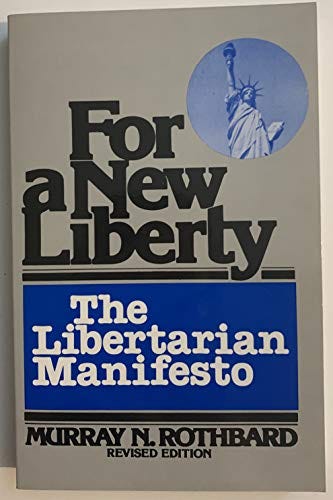
In this chapter, Rothbard advocates the abolition of publicly-owned streets and roads:
Abolition of the public sector means, of course, that all pieces of land, all land areas, including streets and roads, would be owned privately, by individuals, corporations, cooperatives, or any other voluntary group ings of individuals and capital.
He begins by explaining that in a libertarian society, street-owners would take over many of the functions that governments now perform: security, cleaning, lighting, enforcing traffic rules, etc. While it would be within owners’ rights to impose any sort of crazy rule, market forces strongly encourage a high degree of uniformity:
Wouldn’t some owners designate red for “stop,” others green or blue, etc.? Wouldn’t some roads be used on the right- hand side and others on the left? Such questions are absurd. Obviously, it would be to the interest of all road owners to have uniform rules in these matters, so that road traffic could mesh smoothly and without difficulty. Any maverick road owner who insisted on a left- hand drive or green for “stop” instead of “go” would soon find himself with numerous accidents, and the disappearance of customers and users.
He then accuses government of inefficiently subsidizing the quantity of highways while inefficiently underpricing their use. The problem is especially acute, he notes, during peak times:
The fact that gasoline taxes are paid per mile regardless of the road means that the more highly demanded urban streets and highways are facing a situation where the price charged is far below the free-market price. The result is enormous and aggravated traffic congestion on the heavily traveled streets and roads, especially in rush hours, and a virtually unused network of roads in rural areas.
Wouldn’t a giant network of toll roads be a major inconvenience? Not so – Rothbard points to many now-familiar technological advances that take the pain out of toll collection.
The chapter ends with a brief discussion of the history of private roads in Britain and the U.S.
Critical Comments
This has always struck me as the least convincing chapter in the book. Yes, Rothbard makes many points that most economists would accept: It’s inefficient for government to heavily subsidize roads, then let people use them whenever they like at zero marginal cost. But he doesn’t offer any remotely practical plan to privatize existing roads, much less explain how privatization would avoid severe monopoly problems. (I propose one Rube Goldberg solution here, though even I have serious doubts about it).
Admittedly, if government had never gotten into the road business, the road network would have grown organically with the rest of the economy, and market forces would have kept monopoly problems in check. Before people built homes, they would have made sure they weren’t at the mercy of a single road supplier. At this point, unfortunately, the owner of a privatized road would often be in a position to extract virtually the entire value of the surrounding real estate (minus a mountain of deadweight costs).
Of course, if new entry were feasible at a reasonable expense, any monopoly problems would only be temporary. Indeed, the fear of potential competition might lead road owners to charge competitive prices from the get-go. But Rothbard doesn’t even mention the standard reason for skepticism about new road construction: The hold-out problem. Stripped of the power of eminent domain, how could a private corporation build a major new highway in a developed area?
I am aware, of course, that some libertarians argue that the hold-out problem has been greatly oversold. Maybe they’re right, but it’s still odd for Rothbard to completely ignore the objection.
The post appeared first on Econlib.
I've thought of this too, what libertarian hasn't?
The idea of tolls on every block would certainly be possible with transponders or number plate readers. There's another way: parcel owners own the road in front of their parcel, from curb to center. The figures I had were $2/sq ft for two inch thick repaving. A 100 foot wide parcel extending 20 feet to the center is $4000 to completely repave. Residential streets seldom need anything so serious; if it were every ten years (still more than necessary), that's only $400/year.
I lived on a private road at the time, paved for 3/4 mile then 1/2 mile dirt. Pothole maintenance every spring was a nuisance but done in a day, although I forget now how much the material cost. In addition, road contractors would make every effort to fix all potholes on a block at the same time. When the county road needed pothole repairing, the crew covered many miles in a day.
Thus I don't see any need for tolling on residential streets.
Business districts would be the same, but more contracted repair than parcel owner. They would pay the cost as just another business expense instead of transponders and plate readers.
The cost would be the same at worst, less if government inefficiency is taken into account.
As for access, I do not see that as a problem. Even if there is only one road to a house, any road company which blocked access would have in effect stolen your parcel from you. Legal recourse is already available for other disturbances, such as a pig farm or sewage treatment plant next door, all night construction, or other actions which make it impossible to live in your home; barring access certainly qualifies. Exorbitant toll increases would qualify too.
(People who worry about big box stores or factories or warehouses or skyscrapers amuse me; do they really think any such business is going to plop down in a residential neighborhood whose infrastructure can't support the building itself or the customer traffic? Morons!)
Hey Bryan, the link to your Rube Goldberg solution appears to be broken. It just points to your website.