

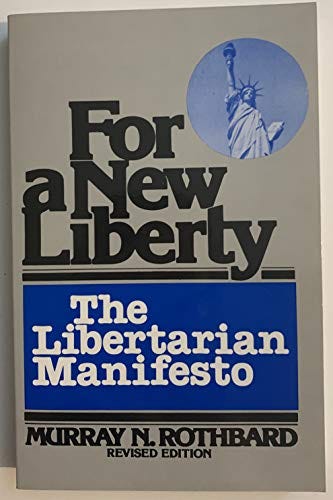
Let me start today’s installment by wishing Murray Rothbard, author of our target book, a happy 100th birthday! Though you repeatedly disappointed me, I never could stay mad at you. You were just too hilarious and full of life.
Summary
This chapter begins with a premise shared by almost everyone – that “involuntary servitude” is impermissible:
The libertarian, therefore, is totally opposed to slavery. An academic question nowadays, one might object? But is it really? For what is slavery but (a) forcing people to work at tasks the slavemaster wishes, and (b) paying them either pure subsistence or, at any rate, less than the slave would have accepted voluntarily.
Rothbard then decries the neglected continuation of involuntary servitude in such forms as the draft, the military’s rules against “desertion,” taxation, subpoenas, jury duty, and psychiatric commitment.
Critical Comments
This is the least radical chapter of the book. Its lead example, the draft, is long gone, and the War on Terror has not revived it as a serious possibility. While the abolition of subpoenas might seem like a big deal, Rothbard has an incentive-compatible alternative:
The most the court should be able to do, then, is to notify the defendant that he is going to be tried, and invite him or his lawyer to attend; otherwise, if they choose not to, the trial will proceed in absentia. Then, of course, the defendant will not enjoy the best presentation of his case.
The only truly radical proposal in this chapter, the abolition of taxation (!), strangely gets just one full paragraph:
In a sense, the entire system of taxation is a form of involuntary servitude. Take, in particular, the income tax. The high levels of income tax mean that all of us work a large part of the year–several months– for nothing for Uncle Sam before being allowed to enjoy our incomes on the market. Part of the essence of slavery, after all, is forced work for someone at little or no pay. But the income tax means that we sweat and earn income, only to see the government extract a large chunk of it by coercion for its own purposes. What is this but forced labor at no pay?
I suspect that many readers will fail to notice the enormity of what Rothbard is saying here; and since he doesn’t discuss radical privatization until much later in the book, the readers who do notice the enormity will dismiss him as a crazy utopian.
The chapter’s analysis of desertion is interesting:
It might be objected that, in the case of enlistees, the soldier or officer has voluntarily agreed to serve for a certain term, and he is therefore obligated to continue in service for that term of years. But the whole concept of “term of service” is part of the problem. Suppose, for example, that an engineer signs a contract with ARAMCO to serve for three years in Saudi Arabia. After a few months he decides that the life is not for him and he quits. This may well be a moral default on his part–a breach of moral obligation. But is it a legally enforceable obligation? …If so, that would be forced labor and enslavement. For while it is true that he made a promise of future work, his body continues, in a free society, to be owned by himself alone…
But if this is true of ARAMCO, or of any other occupation or job in private life, why should it be different in the army? If a man signs up for seven years and then quits, he should be allowed to leave. He will lose pension rights, he will be morally criticized, he may be blacklisted from similar occupations, but he cannot, as a self-owner, be enslaved against his will.
My question: Whatever happened to the standard libertarian argument that if you own something, you have a right to sell it? Yes, I know Rothbard elsewhere works out a whole doctrine of the “inalienability,” but it just doesn’t seem convincing. In any case, there is a loophole big enough to drive a truck through, because in a Rothbardian regime, financial penalty clauses are fully enforceable. So all ARAMCO would have to do to eliminate early termination is include a $1B penalty clause in the contract. And don’t forget that according to Rothbard, in a free society, “there are no bankruptcy laws and defaulting borrowers are considered criminal.” (Man, Economy, and State)
The high point of chapter 5 appears in the discussion of anti-strike laws. Rothbard is no friend of unions, but he points out that without government assistance, they’re just a minor nuisance. Instead of imposing regulations to limit the abuse of union power, why not just take away union privileges and let market forces sort things out?
It is characteristic of our statist trend that, when general indignation against unions led to the Taft-Hartley Act of 1947, the government did not repeal any of these special privileges. Instead, it added special restrictions upon unions to limit the power which the government itself had created. Given a choice, the natural tendency of the State is to add to its power, not to cut it down; and so we have the peculiar situation of the government first building up unions and then howling for restrictions against their power. This is reminiscent of the American farm programs, in which one branch of the Department of Agriculture pays farmers to restrict their production, while another branch of the same agency pays them to increase their productivity.
Indeed.
The post appeared first on Econlib.
The alienability of a given object depends upon one's physical capacity to transfer one's control over it to another person. Since you can't yield control over your own body (i.e. your motor neurons continue to animate your body in spite of your contractual promise to surrender control), your ownership of your own body is inalienable. At most, you can take custody of someone else only so long as they are unable to fend for themselves, and even then only for the purpose of delivering possession to them when they do gain/regain their capacity to function independently. A parent/custodian/guardian is not a slave-owner; such a person has a positive obligation to conserve the property in their care.
More generally, the controlling principle here is that contracts that are impossible to perform are void. Consenting to a reassignment of certain rights is secondary to the process by which rights are generated in the first place; consent doesn't create rights _ex nihilo_.
"enormity" = great evil, wickedness, or moral outrage (in educated usage, at least).
Immensity?